Earl Warren Quotes
Marriage is one of the "basic civil rights of man," fundamental to our very existence and survival.
The decision was unanimous. Virginia’s racist slave era tradition used the power of the state to forbid interracial marriage for the purpose of maintaining white supremacy. Most of the Southern, formerly slave, states had such laws. The most absurd aspect of the anti miscegenation laws was that all whites and Blacks—and other so caltcled “races” all emanated from the same African human female who was Black.
Earl Warren, 1891-1974, Chief Justice, U.S. Supreme Court, Governor of California (Republican), Republican Vice Presidential Candidate (with Dewey), Loving v. Virginia, 1967, h
Sourced by: Eigen's Political and Historical Quotations


This quotation illustrates the Catch 22 dilemma that faces a minority. Black slaves were not allowed to marry and have formal families. After the Civil War racists warned against Blacks who had no respect for marriage monogamy end civil family life. See {619099} But when the slaves were freed and the ex slaves attempted to formalize and solemnize their marriages, they were castigated for that – acting like white people.

This was passed after the Civil War had ended---during Reconstruction. Many states had similar laws until the Supreme Court challenges to them in the latter half of the 20th century.

Although intermarriage is discouraged by many cultures in America, Black intermarriage is the only kind that for years had the force of the criminal law supporting the prejudice.


Virginia never did recognize interracial marriage in its own. A Supreme Court ruling invalidated their law.


This classic quotation illustrates several things. First, the degree of racism that existed in 1944 in West Virginia. Second, not how young Robert Byrd immediately leaped from the possibility of integrating our fighting forces to interracial sex. That has been typical of white racism in America—a preoccupation with race and sex. Last, Byrd who became a member of the KKK, completely changed his mind over the year and ended up supporting the things that, as a youth were worse than the demise of the nation. He matured and grew on the race issue as much of the country did and ended as a strong supporter of equality and civil rights—including affirmative action.


In the 1930s African Americans who traveled were subject to countless humiliations whenever the sought hotels, rooming houses, restaurants and other accommodations. Gas stations would not allow them to use bathrooms and they were reduced to using open fields. Traveling and vacationing was, for Blacks, humiliating. Wikipedia: “Green reviewed hotels and restaurants that did business with African Americans during the time of Jim Crow laws and racial segregation in the United States. He printed 15,000 copies each year. In the 1930s, Green began his work by compiling data on stores in the New York area that accepted black travelers, and published his first guide in 1936. Similar guides had been published for Jewish travelers, who sometimes faced discrimination. Green's guide was so popular that he immediately began to expand its coverage the next year to other US destinations, adding hotel and restaurants as well.”

Theodore Roosevelt, became President when President McKinley was assassinated. One thing that he did was to have the Negro leader, Booker T. Washington to lunch at the White House. He had previously had Blacks in his famous Rough Riders. Although Roosevelt had not taken a public position in inter-racial marriage, in the South, and much of rest of the country, accusing someone of favoring miscegenation was as serious an insult as there was. The accusation was used to attack anyone who did not favor segregation, lynching and Jim Crow in the same way that people who favored Medicare or Labor Unions were called “communists”. Cardamon himself was the target of many for his disrespectful and gross description of the president. See Quotation


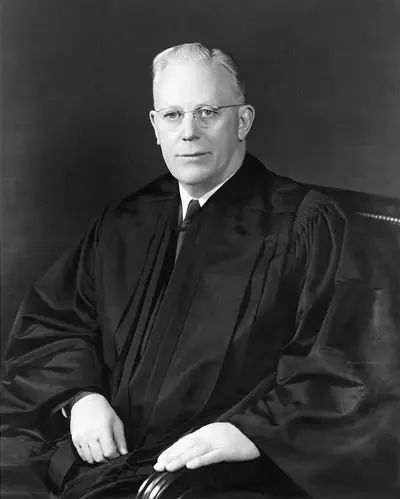
Earl Warren was an American politician and jurist who served as 30th governor of California from 1943 to 1953 and Chief Justice of the United States from 1953 to 1969. The "Warren Court" presided over a major shift in American constitutional jurisprudence, which has been recognized by many as a "Constitutional Revolution" in the liberal direction, with Warren writing the majority opinions in landmark cases such as Brown v. Board of Education (1954), Reynolds v. Sims (1964), Miranda v. Arizona (1966) and Loving v. Virginia (1967). Warren also led the Warren Commission, a presidential commission that investigated the 1963 assassination of President John F. Kennedy. He is the last chief justice to have served in an elected office before entering the Supreme Court, and is generally considered to be one of the most influential Supreme Court justices and political leaders in the history of the United States.
