Lawrence M. Krauss Quotes
Whatever the evolutionary basis of religion, the xenophobia it now generates is clearly maladaptive.
Krauss, Lawrence M. A Universe from Nothing: Why There Is Something Rather Than Nothing. Free Press, 2012.


The amazing thing about this quotation of 1913 is that at the end of the 20th century the Christians were again at the Muslims throats and Bosnian Muslims were being murdered and ethnically cleansed by the Roman Catholics of Croatia and the Eastern Orthodox Christians of Serbia. The hatred had persisted—the legacy of 1000 years before.


Zeal in religious opinion is one of

Ernestine Louise Polowsky


This quotation—presented in its entirety because it is so unbelievable—illustrates one of the uglier and nasty aspects of Colonial America. Most of us associate early American colonists with persecuted minorities escaping the intolerance of Europe, but so much of the concept of tolerance then concentrated on the rights of a religious community but provided little if any obligation to then be tolerant of OTHER minorities in their colonies and communities. In this case, Massachusetts Christians did not perceive Quakers as either Christians or another sect to be tolerated. They not only wanted the Quakers stopped from coming to other parts of America, but actually attempted to interdict the Quaker immigrant ship, capture the Quakers, and sell them into slavery in the Caribbean. What makes the incident even more offensive is that the ethics of this was never questioned and was even justified as Christian acts and even duty. The Welcome evaded the Porpoise The founding fathers knew about these incidents and the religious discrimination that was rampant in many Colonial communities as bad as England and Europe. Hence, the separation of Church and State concepts were not just protections against the way of the old world, but dealt with a clear and present danger that Colonial history had demonstrated.

Just days before September 11. While in America, such a remark would just be considered an insensitive and inappropriate utterance, in France, he was brought before the courts and threatened with jail and a large monetary fine under a 1972 French law which bans hate speech. See {595311}

Toleration is a relative term. The Muslim Moors made Christians (and Jews) pay a special tax. At times they were forced to wear special clothing so that they could be readily identified. And they could not build churches larger or taller than the smallest mosque in the community. At times, their occupations were restricted but at other times Christians and Jews were appointed to the highest positions like Vizier. The Inquisition, in contrast, forced all Muslims (and Jews) to leave the country without any of their property or money or be tortured and killed—usually by burning at the stake unless of course that they converted to Christianity.

In the early stages of Islam, Muhammad had hoped to convert the Jews and others on the Arabian Peninsula. When they refused to be converted, he warred against them usually killing the men, and taking the women and children as slaves. The result was that non-believing tribes were “cleansed” from the Arabian Peninsula. The Muslims at the time preferred children as slaves. For then they could convert the children against their will. Adults in Islam must accept Islam in order to convert. Children are regarded as having no such maturity of decision making and therefore opposition to conversion may be ignored and they may be forced. Critics of Islam and those who argue that Islam is at odds with all other religions point to this quotation. They claim that it is the only religion whose founder and fundamental scriptures demand war against others for no other reason than that they believe in a different religion. The Catholic Church during the Crusades and the Inquisition had a similar philosophy as did Christian missionaries colonizing Africa later. One difference is that most Christians today repudiate the doctrine as against the true spirit and teachings of Christ and view it as historical error, while very few modern Muslims repudiate this quotation of the Prophet.

Samuel Langhorne Clemens, 1835-1910


His intolerance and bigotry not only is of Muslims and Hindus, but extends to some Protestant denominations as well. See {643060} for additional examples of bias on the part of this erstwhile Presidential aspirant. To him, religions, unless they agree with his religious beliefs, are evil and dangerous to society.


Odo of Chatillon-Sur-Marne. This is an amazingly distressing quotation for most moderns. Here we have the Pope preaching genocide and ethnic cleansing. This was one of the main triggers of the bloody Crusades and is not forgotten by Muslims in the Middle East Today. As Islam has not changed a great deal in 1000 years, most Muslims assume that the same is true of Christianity and especially the popes and the Roman Catholic Church. This is one of the reasons that the Islamic world reacts so strongly when a pope makes any statement negatve about Muslims and Islam.

Despite the fact that the statues were holy symbols to Buddhists, they were offensive to Muslims who say statues as “graven images” prohibited by the Koran. See Wakil Ahmad Muttawakil {608419} and Jamal’s other quotation {604665}.
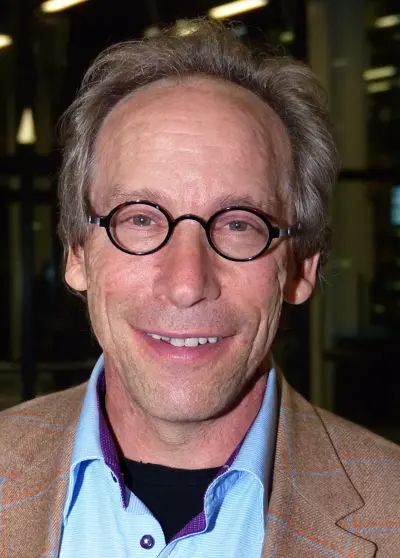
Lawrence Maxwell Krauss is an American-Canadian theoretical physicist and cosmologist who previously taught at Arizona State University, Yale University, and Case Western Reserve University. He founded ASU's Origins Project, now called ASU Interplanetary Initiative, to investigate fundamental questions about the universe and served as the project's director.
