Franz Mehring Quotes
What is to-day the foreign policy of all States – namely, a policy of robbery or barter, where every State tries to swindle the other in its own interest – this foreign policy cannot be controlled by an assembly consisting of several hundred people. A Parliament can certainly lay down the lines on which foreign policy must go, but it cannot control the carrying out of its wishes; it cannot prevent the aims of the policy being changed in the process of execution. A Cabinet that represents the interests of the dynasty and the ruling classes against foreign countries can never show the cards to Parliament, while they are cheating or trying to cheat the foreigners
Franz Mehring, 1846-1919, German Journalist & Pacifist, Co Founder, German Communist Party, “Anglo-German Relations,” Social Democrat, Vol.15, No.12, December 1911
Sourced by: Eigen's Political and Historical Quotations


The term immediately grew very popular in Germany and soon made its way to the English-speaking countries as “realpolitic”.


In 1884 Germany had become active in its colonization and outmaneuvered England in taking over Cameroon. Then Germany showed some interest in a part of New Guinea. The English resisted, not for any geopolitical reasons but because the British leaders did not want to be bested by Bismarck.


This is a statement that was meant as a criticism but would be interpreted by many Americans as just a straight forward description. Many believe that is the way it should be.
England in this quotation claims the right to interfere in the internal affairs of another nation if there is mismanagement or crises AND her national interests are affected.


“Dey” and “bey” were Arabic terms for the local ruler of an area.


See {640831} for more on this subject.
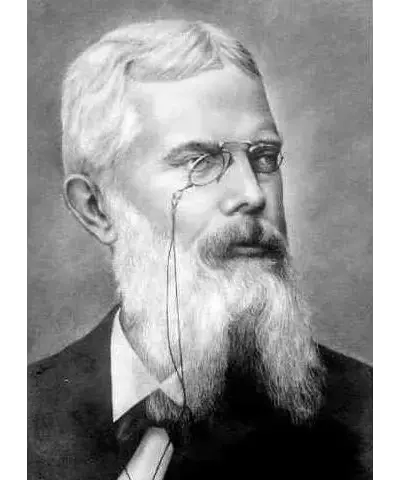
Franz Erdmann Mehring was a German communist historian and revolutionary socialist politician who was a senior member of the Social Democratic Party of Germany during the German Revolution of 1918–1919.
