Cao Cao Quotes
What is at a peak is certain to decline. He who shows his hand will surely be defeated. He who can prevail in battle by taking advantage of his enemy's doubts is invincible.


Versions of this proverb appear in many countries. Although the proverb originated in reference to military affairs, it is applicable to politics, leadership, management, and in the modern world is beginning to be applied to individuals and their careers and futures.

Conant, a great scientist in his own right, had the confidence of the political, academic, and industrial establishment and was appointed to the Committee that was to set policy for the Manhattan Project representing President Roosevelt. Germany had been the world leader in Physics before the war. American leaders and scientists were certain that we were in a scientific race with the Germans. Even after Germany had been defeated, President Truman was told that we had beaten the Germans in the race for the bomb. Actually, although almost no one in the US government realized it then, the Germans had NO PROGRAM of nuclear weapons development at all. Hitler did not trust the Theoretical Physics and Theory of Relativity because Einstein and other Jewish scientists had been instrumental in its development. He derogatorily referred to it as “Jewish Science”. Germany bet its scientific efforts on the V2 Rockets and the Jet Airplane, both of which they were successful with but too late to have any material effect on the war. Ironically, even after most of the great German physicists were run out of Germany, there were still two of the greatest who may well have been capable of nuclear weapons development. But neither Werner Heisenberg or Otto Hahn were inclined to engage in that kind of research, and neither of them were even asked whether or not they thought it was possible. The anti-Semitic Nazis just assumed that it could not be. Truman and his associates did not find out for another year or more that there was no race. There was one OSS spy, Moe Berg, who had actually talked to Heisenberg in the midst of the war, and concluded that he not only was not working on an atomic bomb, but was not up on the latest pre-war critical research needed to develop a bomb. Hahn knew and had created the first chain reaction for which he later won the Nobel prize but he was a chemist and didn’t really understand the Physics and mathematics involved in making a weapon and was a confirmed pacifist. Ironically, his colleague, Lise Meitner who had done the physics and mathematics on that experiment was Jewish and had to flee Germany. In Denmark she gave the results to Niels Bohr, who shared them with Leo Slizard and Einstein when Bohr came to the United State and that initiated the famous letter that was sent to FDR which triggered the Manhattan Project. The German first nuclear reaction was used by the Americans because the politicians listened to the scientists, while in Germany, the politicians gave no credence to their scientists and their experiments in nuclear fission.

The General refused. He had already achieved a strategic victory and it was only a matter of time when the Dutch would withdraw on their own as their supply lines were cut off and the populations wanted them out.

Bush wanted to expand NATO to include Poland and Hungary. However the German and American governments had previously (before the collapse of the Soviet Union) given promises to the Russians that NATO would never be expanded Eastward from East Germany. See {32678}. Bush went ahead and violated those promises anyway using the excuse that the agreement had not been part of a treaty. That decision had implications for Russian attitudes towards the United States and Western Europe. The Russians repudiated their agreements in 2014 and invaded the Crimea and took it from Ukraine. The Russians however had broken promises many time whereas the United States reversals of promises, like this were few. Bush’s logic however was not in keeping with traditional American standards. We made a deal with Russia when they were a strong superpower who could easily damage many of our national interests. However, when they were weak, we no longer have to do anything we agreed to when they were strong. The great irony was that reacting against Westernization of Ukraine, Premier Putin, by seizing the Crimea and successfully supporting ethnic Russian separatists in Ukraine put Russia back on the map as a major power in the world who could act with impunity against the interests of the West, Europe, the United States and the NATO countries. Most Russians rejoiced that Russia was again an empire that could not be dictated to.


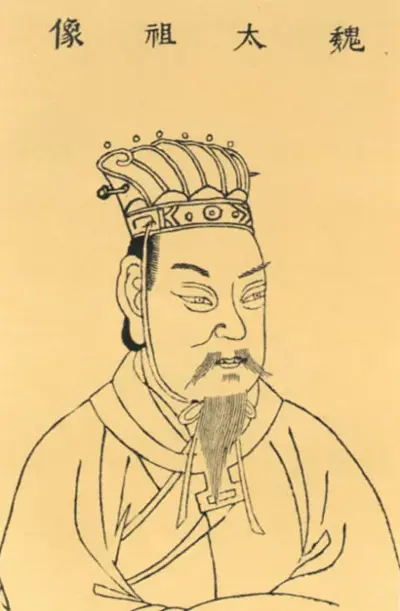
Cao Cao, courtesy name Mengde (Chinese: 孟德), was a Chinese warlord, statesman and poet. He was the penultimate grand chancellor of the Eastern Han dynasty who rose to great power in the final years of the dynasty. As one of the central figures of the Three Kingdoms period, he laid the foundations for what was to become the state of Cao Wei and ultimately the Jin dynasty, and was posthumously honoured as "Emperor Wu of Wei" although he never was an emperor during his lifetime. He remains a controversial historical figure, and is often portrayed as a cruel and merciless tyrant in subsequent literature; however, he has also been praised as a brilliant ruler and military genius with unrivalled charisma who treated his subordinates like his family.
