John Adams Quotes
What havoc has been made of books through every century of the Christian era? Where are fifty gospels, condemned as spurious by the bull of Pope Gelasius? Where are the forty wagon-loads of Hebrew manuscripts burned in France, by order of another pope, because suspected of heresy? Remember the 'index expurgatorius', the inquisition, the stake, the axe, the halter and the guillotine.
Adams, John. The Works of John Adams, Second President of the United States. Edited by Charles Francis Adams, vol. 6, Charles C. Little and James Brown, 1851, p. 513.


Servetus’ book On the Motion of the Heart and Blood of Animals, was so threatening that of the 1000 copies that were printed only 3 survived the burning including ironically Calvin’s personal marked up copy.


Ingersoll was considered to be the greatest orator and political thinker of his day, but his overt atheistic views curtailed his elected political career.

While the Visigoths had some very advanced legal principles, this law, quoted in its entirety is typical of the nations that were part of the Catholic world. The church and its doctrines were immune from any possible criticism, explicit or implicit. This is the most formalized and sophisticated compendium of laws of the so-called “barbaric peoples” of Europe. The compilation was in many ways a documentation of the traditional laws of the Visigoths that had evolved over hundreds of years.

The Jesuits had been among the first Christian missionaries to Japan. Educationally very strong they developed Latin-Japanese dictionaries and taught other Jesuits Japanese and soon, the Jesuits were not only successful at converting Japanese to Christianity, but they were fantastic as merchants and traders. They made so much money that the Jesuit order became a power itself to some rivaling the Vatican. The Jesuits had an independence from the Catholic Hierarchy and their money allowed them to get almost anything they wanted. This famous Bull, in effect, gave the Jesuits a monopoly on trade and on souls.


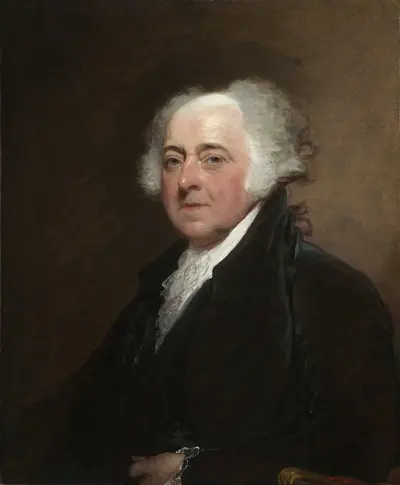
John Adams Jr. was an American statesman, attorney, diplomat, writer, and Founding Father who served as the second president of the United States from 1797 to 1801. Before his presidency, he was a leader of the American Revolution that achieved independence from Great Britain, and he served as the first vice president of the United States. Adams was a dedicated diarist and regularly corresponded with many important figures in early American history, including his wife and adviser Abigail Adams and Thomas Jefferson.
