John C. Calhoun Quotes
Were there no contrariety of interests, nothing would be more simple and easy than to form and preserve free institutions. The right of suffrage alone would be a sufficient guarantee. It is the conflict of opposing interests which renders it the most difficult work of man.
Calhoun, John C. A Disquisition on Government. Edited by Richard K. Crallé, A.S. Johnston, 1851, p. 14.


In many ways living under tyranny is quite easy as there are few choices that the citizen must make. As hard as it is for us to imagine today, while her husband was President of the United States, the First Lady wrote a nationally syndicated newspaper column every single day with politics frequently the subject. While she usually agreed with the President, there were occasions where they seemed to not see things exactly the same. She tended to be more liberal than he. However, there were those who believed that when she criticized politicians, it was with FDR’s knowledge and blessing and she sometimes did his “dirty work.” Eleanor Roosevelt was one of the most influential people in the country—certainly more-so than any First Lady before and since.


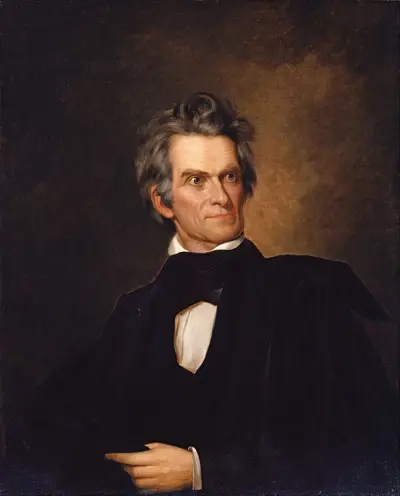
John Caldwell Calhoun was an American politician and political theorist from South Carolina who held many important positions including being the seventh vice president of the United States from 1825 to 1832, while adamantly defending slavery and protecting the interests of the white South when its residents were outnumbered by Northerners. He began his political career as a nationalist, modernizer, and proponent of a strong national government and protective tariffs. In the late 1820s, his views changed radically, and he became a leading proponent of states' rights, limited government, nullification, and opposition to high tariffs. He saw Northern acceptance of those policies as a condition of the South remaining in the Union. His beliefs and warnings heavily influenced the South's secession from the Union in 1860–1861.
