Abdurrahman Wahid Quotes
Well, the most important thing about Islam is that we have to differentiate between two kinds of Islam. The first one is the institution of Islam... second, the culture of Islam.
Wahid, Abdurrahman. "Interview: Abdurrahman Wahid." Frontline: Muslims, PBS, 9 May 2002.


The road name is not only descriptive of the fact that Muslims make pilgrimages to Mecca for religious purposes. But by Saudi law, no one but a Muslim may use this road. Everyone in Saudi Arabia must have an identity card and that card is color coded by religion. For American’s the notion that there might be a public road on which only members of one religion may travel is as foreign a concept as there is.


The Governor had introduced Sharia, Islamic Law, into his state. When a woman was sentenced to death by stoning, the Federal Government nullified the sentence on the ground that stoning was not morally right nor was a death penalty for her actions. The woman was not executed


Historically, this quotation shows that the negative relationship between the West and Islam and negative views of Islam was not a new phenomenon at the beginning of the 21st century. It existed long before, and as with the 21st century concerns, violence and war were the major concerns.


A large part of the spread of Islam was military conquest and conversion by the sword. However, the Arabs and other people of the desert were great traders and the trade routes went right through the newly Islamic areas. As the camels went, so did the new Muslims and many converted because Islam was a more modern and humane religion than what they had, and in some cases the motivation was to be more acceptable to Arab customers.

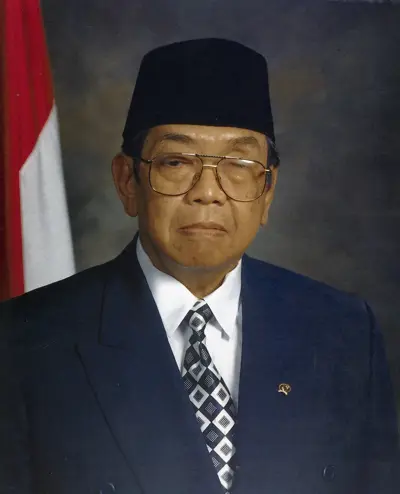
Abdurrahman Wahid, colloquially known as Gus Dur (listen (help·info)), was an Indonesian Muslim religious and political leader who served as the fourth president of Indonesia from 1999 to 2001. The long-time president of the Nahdlatul Ulama and the founder of the National Awakening Party (PKB), Wahid was the first elected president of Indonesia after the resignation of Suharto in 1998.
