Saudi Arabia Quotes
Muslims’ Road
The road name is not only descriptive of the fact that Muslims make pilgrimages to Mecca for religious purposes. But by Saudi law, no one but a Muslim may use this road. Everyone in Saudi Arabia must have an identity card and that card is color coded by religion. For American’s the notion that there might be a public road on which only members of one religion may travel is as foreign a concept as there is.
Saudi Arabia, Name of the Saudian Arabian road to Mecca
Sourced by: Eigen's Political and Historical Quotations


A large part of the spread of Islam was military conquest and conversion by the sword. However, the Arabs and other people of the desert were great traders and the trade routes went right through the newly Islamic areas. As the camels went, so did the new Muslims and many converted because Islam was a more modern and humane religion than what they had, and in some cases the motivation was to be more acceptable to Arab customers.


Historically, this quotation shows that the negative relationship between the West and Islam and negative views of Islam was not a new phenomenon at the beginning of the 21st century. It existed long before, and as with the 21st century concerns, violence and war were the major concerns.
This seemingly academic quotation became extremely important over 200 years after it was written because it documents the historical presence of the Rohingya Muslim people in the Arakan province of Burma (Myanmar) which is mostly very orthodox Buddhist. In 1982, the Burmese government revoked the citizenship of the Rohingya on the grounds that they were illegal immigrants from bordering Bangladesh and had no historical roots in Burma. This quotation shows that this claim was untrue.


The Koran is even more discriminatory regarding Jewish & Christian clerics: {584380}.

Within Christianity there has been a continual debate regarding a woman’s proper role in society in general and in church affairs in particular. This quotation is often used to justify a husband’s dominant role over the wife. Also it supports those who object to women in the ministry or the priesthood. See {587062}. It is useful to note that much of Islam which preaches a similar view of females, probably learned it from Christianity which preceded Islam by almost 600 years.

The Governor had introduced Sharia, Islamic Law, into his state. When a woman was sentenced to death by stoning, the Federal Government nullified the sentence on the ground that stoning was not morally right nor was a death penalty for her actions. The woman was not executed

See {617160} for a similar legal opinion. The concern was that poor Muslims may desert their faith when they see how well-dressed the tolerated people, Christians and Jews, are. They might conclude that Christianity or Judaism is better at making people wealthy than was Islam. See {617162} for a Koranic support of the idea. The Western view of this is generally, that is what the marketplace of ideas is all about. In 21st century America, Jews and Mormons on the average were the wealthiest religious groups. The logic of al-Ramli is that Mormons and Jews—each only 6 percent of the population—should not be allowed to show their wealth, lest Roman Catholics for example—25 percent of the population—will convert from Catholicism to the other two religions. From a democratic point of view, the response should be, we so be it. That is their choice. But America is the living proof that the assumption of conversion and loss of faith is per se wrong. The Mormons and Jews are visibly more successful, yet there are very few Roman Catholics leaving their church and converting to the two wealthier religions. There are some, but not at any greater rate than people convert from “wealthier” religions.
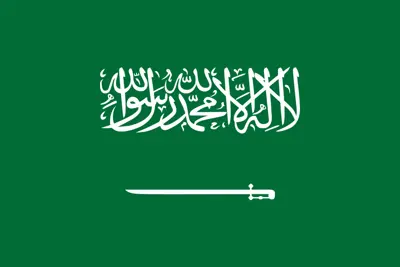
Saudi Arabia, officially the Kingdom of Saudi Arabia, is a country in Western Asia constituting the vast majority of the Arabian Peninsula. With a land area of approximately 2,150,000 km2 (830,000 sq mi), Saudi Arabia is geographically the largest sovereign state in Western Asia, the second-largest in the Arab world (after Algeria), the fifth-largest in Asia, and the 12th-largest in the world. Saudi Arabia is bordered by Jordan and Iraq to the north, Kuwait to the northeast, Qatar, Bahrain, and the United Arab Emirates to the east, Oman to the southeast and Yemen to the south; it is separated from Egypt and Israel in the north-west by the Gulf of Aqaba. Saudi Arabia is the only country with both a Red Sea coast and a Persian Gulf coast, and most of its terrain consists of arid desert, lowland, steppe and mountains. As of October 2018, the Saudi economy was the largest in the Middle East and the 18th largest in the world. Saudi Arabia also has one of the world's youngest populations, with approximately 50 percent of its population of 34.2 million being under 25 years old.
