Carroll Quigley Quotes
Islam, the third in historical sequence of the ethical monotheistic religions of the Near East, was very successful in establishing its monotheism, but had only very moderate success in spreading its version of Jewish and Christian ethics to the Arabs.
Quigley, Carroll. The Evolution of Civilizations: An Introduction to Historical Analysis. Macmillan, 1961, p. 193.


Historically, this quotation shows that the negative relationship between the West and Islam and negative views of Islam was not a new phenomenon at the beginning of the 21st century. It existed long before, and as with the 21st century concerns, violence and war were the major concerns.


The Governor had introduced Sharia, Islamic Law, into his state. When a woman was sentenced to death by stoning, the Federal Government nullified the sentence on the ground that stoning was not morally right nor was a death penalty for her actions. The woman was not executed


A large part of the spread of Islam was military conquest and conversion by the sword. However, the Arabs and other people of the desert were great traders and the trade routes went right through the newly Islamic areas. As the camels went, so did the new Muslims and many converted because Islam was a more modern and humane religion than what they had, and in some cases the motivation was to be more acceptable to Arab customers.


Slogans taken from posters listing 10 people targeted by Muslim extremists. Most were people who had said or published material that some fundamentalist Muslims had decided were offensive to Islam. One was Charlie Hebdo, the French Publisher who Islamic terrorists murdered later. Note the Americanisms that the terrorist propagandists adopted. The Wanted Dead or Alive was taken from the posters of the American West of the 19th century. The "Yes we can" was lifted from the Barack Obama 2008 campaign slogan. The "Bullet A Day Keeps the Infidel Away" is a takeoff on the American saying "An apple a day keeps the Doctor away." One of the reasons for these Americanisms was that the founding editor was Samir Khan, self-described American traitor.

Ataturk wrote this manual personally. Religious Turks took violent offense to Ataturk’s proclamation that Turks were great without Islam.
“Musselman” was then a term for Muslims used by Europeans. The Arabs then, as many terrorists still do, commonly captured American and European ships enslaving the crews and passengers or holding them for ransom. Jefferson and Adams explained that if this could not be stopped and resolved it might mean war. The Americans could not understand why they were attacked when American had done nothing to offend the Arab Counties. The Arab envoy explained their “duty” and “right” to attack Americans and why war was not a serious deterrent to Islamic nations. Ironically, the same explanations were given by Arab leaders in the early 21st century to illustrate why the Arab countries could not be intimidated.
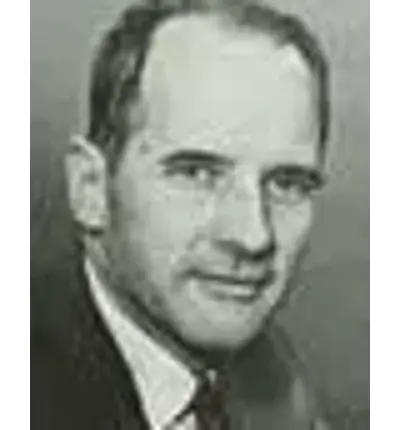
Carroll Quigley was an American historian and theorist of the evolution of civilizations. He is remembered for his teaching work as a professor at Georgetown University, and for his writing about global conspiracies, in which he argued that an Anglo-American banking elite have worked together for centuries to spread certain values globally.
