Eleanor Roosevelt Quotes
We will have to want peace, want it enough to pay for it, pay for it in our own behavior and in material ways. We will have to want it enough to overcome our lethargy and go out and find all those in other countries who want it as much as we do.
At the time, Fascist Germany and Japan were aggressively attacking other nations who were trying to mobilize to stop their Fascist ideas of world domination. In America, unlike after WWII, many of the Republican Party Leaders were then isolationists and were adamant that we should not expand our military capability. They wanted to spend no more money on defense. ER and her husband wanted to increase defense spending to increase our military readiness and provide arms to England, China and others who were trying to defend against the Axis. They were castigated as ‘War Mongers’ by the isolationists. ER went to the people to explain that without spending on military strength, there would be no peace. Ironically, the conservative forces who criticized Mrs. Roosevelt as a war monger for building up our military, after WWII when the Cold War began, they criticized her for not being enough of a hawk and not sufficiently supporting the military and aggressive foreign policies.
Eleanor Roosevelt, 1884-1962, First Lady (Franklin Delano Roosevelt), U. S. Delegate to the United Nations, This Troubled World, 1938
Sourced by: Eigen's Political and Historical Quotations


The quotation was made in the context of the Arab Israeli conflict, but the principle is general.


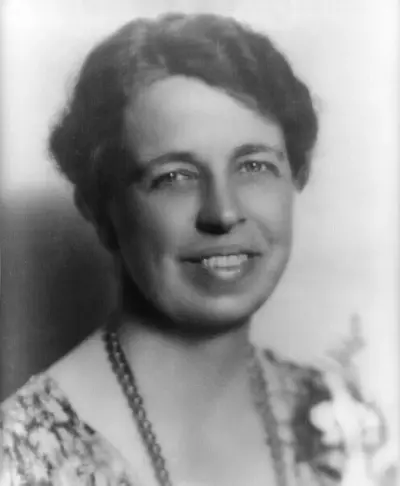
Anna Eleanor Roosevelt was an American political figure, diplomat and activist. She served as the First Lady of the United States from March 4, 1933, to April 12, 1945, during her husband President Franklin D. Roosevelt's four terms in office, making her the longest-serving First Lady of the United States. Roosevelt served as United States Delegate to the United Nations General Assembly from 1945 to 1952. President Harry S. Truman later called her the "First Lady of the World" in tribute to her human rights achievements.
