Julia Ward Howe Quotes
We, 'the United States of America, are now called upon to play the part of Florence Nightingale; to take our stand and insist upon it that the slaughter shall cease. Oh! let us give money, let us give life, but let us stand by our principles of civil and religious liberty.'
This speech was given on the Armenian murders, (the word genocide had not yet been coined), in Turkey
Julia Ward Howe, Social Activist, Poet, Faneuil Hall, Boston Nov. 26, 1894 quoted in Peter Balakian's Burning Tigris
Sourced by: Eigen's Political and Historical Quotations

The United States did very little to stop the Armenian genocide that had been carried out by Turkey. We also did little to stop the Nazi genocide of the Jews and Gypsies, the extermination of the Cambodian urban and intellectual population and the Ruanda genocide of the Tutsies. The argument that we could not stop it tended to mean that we did little or nothing to diminish the murder. President Clinton stated that this failure was his greatest mistake in office.

Wilson was referring to the Armenian genocide that was being carried out by Turkey. Under the League of Nations treaty then executed, the League would take over Armenia and end the massacres.
The Christian Armenians, a minority in Turkey and its lands, were discriminated against like other non Muslim minorities in the Ottoman Empire. But during the Turkish War with Russia and WWI, some Armenians defected and served on the Russian side. Many Turkish citizens took revenge on Armenians by means of murder and torture. Soon, the extermination of the Armenians became the official “Young Turk” government policy. Hundreds of thousands of Armenians were killed outright, and about an equal number were “deported” to special areas. Many died of malnutrition along the forced march of Ethnic Cleansing. Others were murdered as they were deported. No one knows exactly how many Armenians were killed with estimates ranging from ½ million to 4 million. This was the first genocide of the 20th century. Modern Turkish leaders however, are in denial about the Armenian deaths. They claim that there was a war and food was scarce; the only Armenians killed, the claimed were proven Russian agents. They further claim that the Armenian behavior was in large part responsible for the forced deportations because of their lack of patriotism and unwillingness to help the Turkish authorities identify the Russian agents. Most Turks today are unaware of the Armenian Genocide as nothing is taught about the massacres in schools or other institutions. It is against the law in Turkey to even have an intellectual study of the Turkish behavior towards the Armenians, much less publish anything about it.

Although nether he or the Sultan had made vigorous efforts to stop the massacres, he had promised the world community that Turkey would see that justice was done (See {620596} ). However, there were a few tried and one governor of a province was hanged and a few others received short jail sentences. Talaat, the worst of The Young Turks regarding the genocide, escaped to Germany. But he was tracked by a surviving Armenian who assassinated Talaat. The assassin was acquitted by a sympathetic German court which ruled that the extermination of the assassin’s family had been so traumatic that temporary insanity relieved the assassin of criminal responsibility.

At the time Dulles was the Assistant Secretary & Near East Division chief of the State Department. The Turks were killing, starving and displacing Armenians—Mostly Christians—in Turkey. Like modern ethnic cleansing and genocides such as Kosovo, Rwanda, and Sudan, the magnitude of the atrocities was denied by the perpetrators and their apologists and other countries did not want to publicly admit the genocide lest they be forced to intervene by public opinion. Previously, the Armenians had slaughtered many Turks, especially the Armenians allied with Russia, and the two groups to this day have a continued distrust of each other—see {51838}, {638251}, {620602}, {620603}, {620604}, {620605}, {620600}, and {620606}


Many Americans were total isolationists at this time. This statement was viewed with alarm by many Republicans and some Democrats.


The genocide when the Hutu tried to exterminate the Tutsis might have been curtailed with large nation intervention, but that would have interfered in the internal affairs of a sovereign state. Two important principles were in conflict. The rights of the Tutsi minority and the traditional prohibition of interfering in the internal affairs of another country. In this and many situations to follow, ranging from Darfur to Zimbabwe, the realization that the traditional prohibition against internal interference has to trump the most egregious violations of human rights.


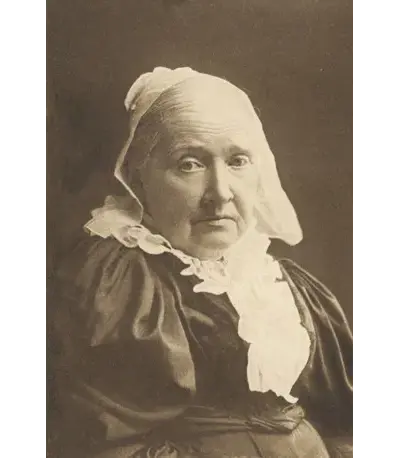
Julia Ward Howe was an American poet and author, known for writing "The Battle Hymn of the Republic" and the original 1870 pacifist Mother's Day Proclamation. She was also an advocate for abolitionism and a social activist, particularly for women's suffrage.
