J. Edgar Hoover Quotes
We [the FBI] are a fact-gathering organization only. We don't clear anybody. We don't condemn anybody..... The minute the FBI begins making recommendations on what should be done with its information, it becomes a Gestapo.
J. Edgar Hoover, 1895-1972, Director, Federal Bureau of Investigation, Quoted in Look, June 14, 1956
Sourced by: Eigen's Political and Historical Quotations


The agent, at J. Edgar Hoover’s instruction had approached the editor of Martin Luther King Jr.’s hometown newspaper and offered Patterson a photograph of King and a white woman in front of a motel with the “information” that King was having an affair with the woman. The agent suggested that the story was that the minster while pretending to respect Christian morality in his public persona was actually violating basic moral standards. Patterson, like any qualified editor would realize that the photograph proved nothing about an affair. There might have been other staff nearby who were not framed in the picture that the FBI agents had taken. There might have been a meeting to discuss civil rights strategy or something else. To Patterson it was unheard of that a Federal Official should try encourage a newspaper to slander an American citizen. Even if true, the Federal Role was astounding. Actually, this was a very common tactic of J. Edgar Hoover and not at all unusual. Also, although it is not known whether King was having any kind of affair with the woman in the picture, King was not a faithful husband from a sexual point of view. At the time, facts about extramarital sex were not printed about politicians and other political figures even if the journalists knew of them (as with John F. Kennedy’s many liaisons) unless they affected the person’s job or made them less effective. It is not known whether Patterson knew anything of King’s peccadillos but that kind of keyhole journalism was not practiced by serious newspapers at the time even if the pictures could be confirmed. That would be “keyhole journalism”—peeping through keyhole to invade the personal privacy of people.


In the face of terror bombings, Britain passed some anti-terror laws which also somewhat infringed on civil rights, liberty and privacy.


Hirsh had uncovered CIA illegal surveillance of anti Vietnam war protesters in the late 1960s. They broke two sets of laws. First, the CIA had no authority to investigate and track American Citizens anywhere but particularly American citizens. Second, the FBI which did have the authority to investigate Americans, were not allowed to use the methods that the CIA did. They violated not only Federal Law and Rules, but also violated the 4th Amendment Rights of thousands of citizens.

Springsteen generally was a favorite of the middle and working class—especially the blue collar workers. He was also very patriotic and expressed that in his songs. However, like many other people, the excesses of the George W. Bush administration caused him to oppose the particular government.


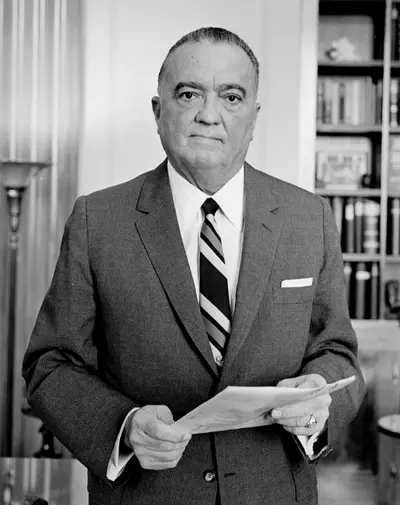
John Edgar Hoover was an American law enforcement administrator who served as the first Director of the Federal Bureau of Investigation (FBI) of the United States. He was appointed director of the Bureau of Investigation – the FBI's predecessor – in 1924 and was instrumental in founding the FBI in 1935, where he remained director for another 37 years until his death in 1972 at the age of 77. Hoover has been credited with building the FBI into a larger crime-fighting agency than it was at its inception and with instituting a number of modernizations to police technology, such as a centralized fingerprint file and forensic laboratories. Hoover is also credited with establishing and expanding a national blacklist, referred to as the FBI Index or Index List, renamed in 2001 as the Terrorist Screening Database which the FBI still compiles and manages.
