Jimmy Carter Quotes
The intelligence agencies sometimes abuse people. The FBI abused Martin Luther King.
Jimmy Carter, 39th President of the United States (Democrat, GA), Al Jazeera, Consider This, July 4, 2014
Sourced by: Eigen's Political and Historical Quotations


The FBI director had become so powerful and unchecked by Congress or the President he used the FBI to assemble files on those whom he wanted including political figures. On many occasions he used these for various forms of blackmail, never for money, but to solicit compliance or support or obtain silence or cessation of opposition to positions he favored—especially the prerogatives of the FBI.


Senator Church was the chairman of the committee. It’s reports (14 in all) are the most extensive documentation of U. S. intelligence ever compiled.

The agent, at J. Edgar Hoover’s instruction had approached the editor of Martin Luther King Jr.’s hometown newspaper and offered Patterson a photograph of King and a white woman in front of a motel with the “information” that King was having an affair with the woman. The agent suggested that the story was that the minster while pretending to respect Christian morality in his public persona was actually violating basic moral standards. Patterson, like any qualified editor would realize that the photograph proved nothing about an affair. There might have been other staff nearby who were not framed in the picture that the FBI agents had taken. There might have been a meeting to discuss civil rights strategy or something else. To Patterson it was unheard of that a Federal Official should try encourage a newspaper to slander an American citizen. Even if true, the Federal Role was astounding. Actually, this was a very common tactic of J. Edgar Hoover and not at all unusual. Also, although it is not known whether King was having any kind of affair with the woman in the picture, King was not a faithful husband from a sexual point of view. At the time, facts about extramarital sex were not printed about politicians and other political figures even if the journalists knew of them (as with John F. Kennedy’s many liaisons) unless they affected the person’s job or made them less effective. It is not known whether Patterson knew anything of King’s peccadillos but that kind of keyhole journalism was not practiced by serious newspapers at the time even if the pictures could be confirmed. That would be “keyhole journalism”—peeping through keyhole to invade the personal privacy of people.


Senator Church was the chairman of the committee. It’s reports (14 in all) are the most extensive documentation of U. S. intelligence ever compiled.


Responding to suggestions that with the demise of the Berlin Wall the spying business will come to a halt: John Moore Cornwell

When he became a candidate, he modified this position and stated that he would abolish both agencies spying on Americans activities but not necessarily abolish all the functions of the agency.

about Iraq possessing weapons or mass destruction This is the one of the kind of statements which many felt were prevarications to justify the President’s desire to invade Iraq. See {618461} for an example of the reaction that was generated.


The justice expanded upon the 18th century quotation of Manon Jeanne Roland, 1754-1793

The reason this quotation is famous is that Clapper answered “No, Sir”. 3 months later Edward Snowden disclosed the fact that the NSA was collecting some information from EVERY telephone call and e-mail made or sent in the United States. The colloquy became famous when the government tried to capture Snowden and try him for illegally revealing classified information when others saw him as a whistle blower who had told the truth and the guys who lied to Congress and the American people wanted to prosecute him.


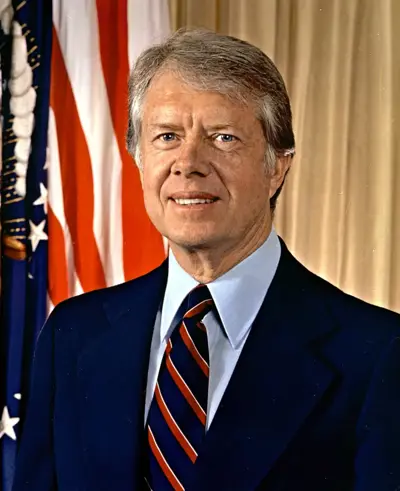
- Born: October 1, 1924
- Died: December 29, 2024
- Nationality: American
- Profession: President
James Earl Carter Jr. is an American politician, businessman, and philanthropist who served as the 39th president of the United States from 1977 to 1981. A member of the Democratic Party, he previously served as a Georgia State Senator from 1963 to 1967 and as the 76th governor of Georgia from 1971 to 1975. Since leaving the presidency, Carter has remained engaged in political and social projects as a private citizen. In 2002, he was awarded the Nobel Peace Prize for his work in co-founding the Carter Center.
