Tom Coburn Quotes
We spend millions of dollars to print this stuff (The Congressional Record). It’s all on line. We are tearing down trees to print material we do not need.
This quotation is an excellent example of how slow Congress is to reform any of its own procedures. In the age of the Internet, instead of printing overnight and distributing the next day, it could easily be released on line which costs almost nothing and gets the Congressional Record—the proceedings of the Congress—to citizens faster and at cheaper.
Tom Coburn, U. S. Congressman & Senator (Republican, OK), Senate Debate, July 30, 2011
Sourced by: Eigen's Political and Historical Quotations


The major reason for not yet harvesting waste is the labor, caital, and energy costs of recycling relative to the value of the resource is too high. Technology improvements and greater shortages continuously change the equation in favor of harvesting more and more resources.


This is the kind of advice that Presidents have given the Congress for years. What makes this quotation noteworthy is the person who made the statement, President George W. Bush. It was made in the 7th year of his Presidency which had in those 7 years, at his urging, gone from a balanced budget and a national surplus projected, to the largest deficit of any nation in history and a projected deficit that even dwarfed that. So the irony of the quotation was that the politician who produced the largest economic burden on future generations was lecturing other politicians on the evils of doing exactly what he himself had been doing. Bush, if nothing else, was one of the most audacious politicians in this respect, though his most severe detractors claim that he did not have the intellectual perspective to even understand the hypocrisy of his quotation,

In 1964 the treasury secretary asked the president how to sell the proposed budget to Congress:


This quotation pithily summarizes a common problem in politics of describing budgets. In most years there has been a national inflation. If a new budget is, in actual dollars, the same as the previous years or a little more, but the increase is less than the inflation level, the agency will not be able to provide the same level of services as the previous year. Therefore services will be cut and those who are politically in favor of more money for the program legitimately describe this as a “budget cut”. Opponents of larger funding increases, also legitimately describe the funding as a “budget increase”. One side refers to what the money can buy and the other, to the absolute dollars spent. This is an example of the classical ambiguity of political oratory.


By the time the debt ceiling needs a Congressional vote, the money has already been obligated and spent. That is when Congress can control spending. The debt ceiling is ALWAYS increased by Congress when asked otherwise the U. S. would not be able to pay its bills. However, many members of Congress like the fact that every year or so the administration needs their votes so they can extract benefits for their constituents more easily with that leverage.


In subsequent years military officers got around this restriction by privately expressing confidential opinions to members of Congress and the press. In the Iraq war for example most senior military officers felt that more troops were needed in Iraq. However, since the President decided on the final troop count only one official, the Army Chief of Staff, has publicly expressed the view that it was insufficient. He was retired early. The stricture still stands.


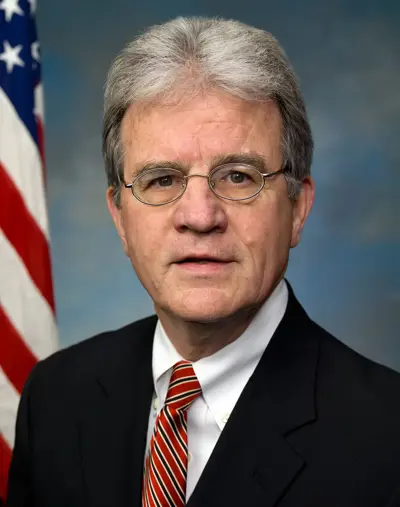
Thomas Allen Coburn was an American politician and physician. A Republican, he was a United States Representative and later the junior United States Senator from Oklahoma.
