William L. Armstrong Quotes
The federal government is currently operating on a budget passed in the dead of night just before Christmas. It comprised three massive documents, ran to a staggering 3,296 pages, weighed in at a hefty 43 pounds, and had a price tag of $650 billion. Congress had about three hours to look at it before voting on it.
William L. Armstrong, U. S. Congressman & U.S. Senator (Republican, CO), Quoted in Conservative Digest, April 1988
Sourced by: Eigen's Political and Historical Quotations

In subsequent years military officers got around this restriction by privately expressing confidential opinions to members of Congress and the press. In the Iraq war for example most senior military officers felt that more troops were needed in Iraq. However, since the President decided on the final troop count only one official, the Army Chief of Staff, has publicly expressed the view that it was insufficient. He was retired early. The stricture still stands.


Many politicians had been complaining that the CDC and NIH had not trained more community hospital staffs in infectious disease protection techniques when the Ebola problem came to America. However, the budgets for these kinds of activities had been cut back each of the recent previous years. Lee made the assumption that Congress wanted government to work. In actuality there was a strong core of legislators in that Congress, who wanted government to fail so that citizens would tire of spending money on failures and thereby shrink the size of government. The members of Congress who wanted government to be effective however at that time had other more dramatic uses of money that training and capacity building of local hospitals.


An unusual feature of the American governmental budgeting process is that Congress has passed a law limiting the amount of debt that the United States can maintain. When there is deficit financing, the law limiting the debt has to be changed periodically as the nation approaches the debt limit. Partisan politicians often take advantage of the fact that the debt limit must be passed and hold the passage hostage to obtaining something they want. The reality is that when Congress passed the previous budgets, they determined what the debt would have to be later. So they have already voted to exceed the budget ceiling. But the requirement of doing it in a second forum allows more pressure to be placed on the administration and the other party’s Congress members. While this process is ongoing, many people in the world are worried and often terrorized by the prospect of the debt ceiling not being passed, in which case the United States would have to default on its obligations—not pay interest, contractors, retirements, salaries, etc. Hence the admonition that the debt ceiling should never be a part of the budget negotiating process by most responsible statesmen and women. But the mist partisan of the politicians want to play politics with the debt ceiling precisely because the stakes are so high and they can get both headlines and leverage.

Both the House and the Senate, as they got larger, developed an Appropriations Committee. When the committee assessed a departmental appropriation, they had also the responsibility for all the other departmental budgets. However, many of the members of the Appropriations Committee tended to favor the interests of their particular constituency or the special interests to which they were beholden. Other members had little or no influence. So there was immense pressure during Reconstruction to ‘share’ the appropriations ‘plum’ by creating appropriations subcommittees. However, each particular subcommittee loses the perspective of and interest in the budget as a whole. The process has led to budget imbalance pressure ever since. But Randall, the Speaker of the House warned about exactly what would happen. He had earlier served as Chairman of the Appropriations Committee, and he was exactly right.


This quotation pithily summarizes a common problem in politics of describing budgets. In most years there has been a national inflation. If a new budget is, in actual dollars, the same as the previous years or a little more, but the increase is less than the inflation level, the agency will not be able to provide the same level of services as the previous year. Therefore services will be cut and those who are politically in favor of more money for the program legitimately describe this as a “budget cut”. Opponents of larger funding increases, also legitimately describe the funding as a “budget increase”. One side refers to what the money can buy and the other, to the absolute dollars spent. This is an example of the classical ambiguity of political oratory.

This is the kind of advice that Presidents have given the Congress for years. What makes this quotation noteworthy is the person who made the statement, President George W. Bush. It was made in the 7th year of his Presidency which had in those 7 years, at his urging, gone from a balanced budget and a national surplus projected, to the largest deficit of any nation in history and a projected deficit that even dwarfed that. So the irony of the quotation was that the politician who produced the largest economic burden on future generations was lecturing other politicians on the evils of doing exactly what he himself had been doing. Bush, if nothing else, was one of the most audacious politicians in this respect, though his most severe detractors claim that he did not have the intellectual perspective to even understand the hypocrisy of his quotation,
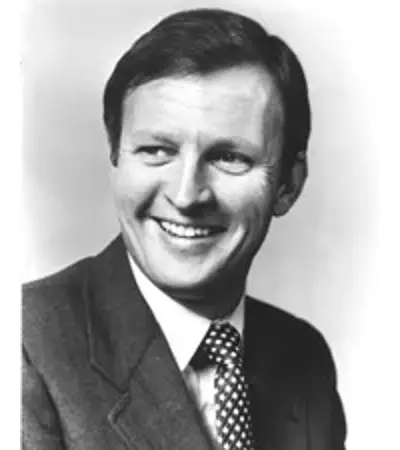
William Lester Armstrong was an American businessman, administrator, and politician. He was a member of the Republican Party and served as a United States Representative and Senator from Colorado. Armstrong died from cancer at the age of 79 on July 5, 2016.
