Sherrod Brown Quotes
We should not mislead the Iraqis into thinking they have unlimited time to reach a settlement. The longer they think that, the less likely they will be to act.
Brown, Sherrod. "Debate on the Global War on Terror." Congressional Record, vol. 152, 15 June 2006.


Adams urged paying tribute to the Barbary Pirates who had an incredible extortion racket going in the Mediterranean. If nations would pay them an annual sum each year, they would not attack and seize merchant ships of that country and sell the ships and goods while holding the sailors for ransom. Most of the European powers were paying the annual tribute as they calculated that it was cheaper than patrolling the Mediterranean with warships or going to war with the Barbary States. More important for Adams was that he did not think that the country would support such a military action. See {640847} That was Adams’ thinking. Jefferson however, sent our Navy and Marines to our first foreign war, and they were very effective. However, despite the American military victories, and because of the inability for the European powers to collaborate and share the burden of naval patrol, the United States went back to the craven policy of paying the blackmail. See {640846} & {640848}.


DeKlerk had just become president of South Africa which was enmeshed in a brutal system of apartheid—racial separation with the 10% white population controlling the 90% black majority. The black political parties were illegal and net even recognized and there was no negotiation at all. The country was a world pariah, boycotted by many in the world including much of the Untied States. When De Klerk became president no one had any idea that he would make such a radical break with the past. However, he announced the lifting of the ban on the Black political parties, and the release of Nelson Mandela who had served 26 years in prison, and then made this famous statement which led to the modern state of South Africa. DeKlerk and Mandela shared the Nobel peace prize for their remarkable achievement.


This is an important political quotation because it illustrates one of the major reasons that Congress was so gridlocked at the time and passed hardly any legislation at all. Farenthold was a relatively new Congressman supported by the Tea Party extreme conservatives. He had no Congressional legislative experience and viewed the House / Senate Conference Committee process more like a Middle East rug bazaar than a serious democratic process of constructive legislation. The position that he wants to take to the Conference Committee which is “livable” to him is not only unlivable to the majority of the Senate, but unlivable for a large part of his own House of Representatives, His position is so extreme that most Senators and many House members on the Conference Committee do not even bother to attempt to negotiate from there. Experienced Congressional legislators realize that negotiation can only take place between realistic options. Otherwise no legislation gets passed which was at that time, OK with most of the Tea Party supporters.


The quotation was made in the context of the Arab Israeli conflict, but the principle is general.
There were some anti-war forces in Germany in World War I.


In this case, he was referring to the situation with the Barbary Pirates who had an incredible extortion racket going in the Mediterranean. If nations would pay them an annual sum each year, they would not attack and seize merchant ships of that country and sell the ships and goods while holding the sailors for ransom. Jefferson favored and authorized war—a naval attack which for many reasons the European nations had not done (they just paid the tribute). Then a peace treaty was finally signed—the first American Treaty.


His recipe for mediating disputes.
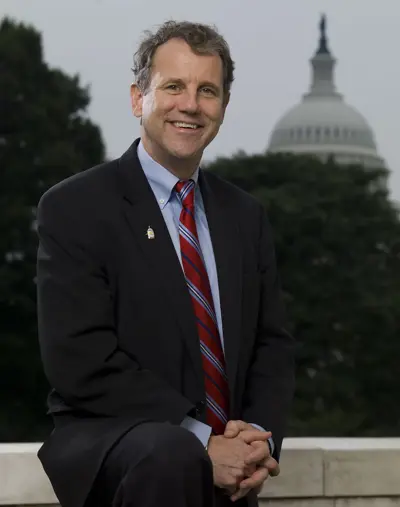
Sherrod Campbell Brown is an American politician, educator, and academic serving as the senior United States Senator from Ohio, a seat to which he was first elected in 2006. A member of the Democratic Party, he was the U.S. Representative for Ohio's 13th congressional district from 1993 to 2007 and the 47th Secretary of State of Ohio from 1983 to 1991. He started his political career in 1975 as an Ohio State Representative.
