Henry David Thoreau Quotes
We seem to think that the earth must go through the ordeal of sheep-pasturage before it is habitable by man.
Thoreau, Henry David. "Walking." The Atlantic Monthly, vol. 9, no. 56, June 1862, p. 667.


inefficient crop yields per acre


The Bedouin live by their flocks without which they have little material existence.

The notion that public lands should be available for the grazing of private herds of animals is very old. Note that the Roman law expressly forbade the collection of fees for grazing rights. The reasoning was that virtually all free Romans had animals that needed grazing and pasture land. So all citizens could take advantage of the public facility. As society became more industrialized and specialized, the percentage of citizens who could benefit reduced over time until there became less than 1 percent of citizens who could benefit from a asset that was paid for and maintained by all citizens. Then there was a rationale for charging user fees.


The word “proprietor” at the time meant someone who had title to land. The title was then almost always tied up with the aristocratic titles. “Great proprietors” were therefore nobles who owned and controlled large land holdings. The “improvers” tended to be the businessmen—especially the manufacturers and the transportation magnates. Large landowners could just make money by renting parts of their land to tenant farmers. They needed no capital, no vision, not much skill or talent, and they didn’t have to take any risks.


Environmentalists counter with the fact that the corporate and government interests in growth at any cost will, and have in the past, found a loophole in every reasonable compromise that has been made. Reasonableness is only a device they use to slow regulation until they can either figure out a loophole or use their great fiscal resources to shape public thinking to soften or eliminate the regulation. Therefore some environments argue that they must be as ideological about the environment as the corporations are about their rights to profit and not compromise even when a compromise appears reasonable. Besides, if the corporations always appear to win, the public will think opposing them is futile. So when they can be beaten on something that is unreasonable, they appear weaker and encourage more environmental public activism.

Withdrawal meant not allowing certain public land to be sold or allotted to homesteading, commercial development, mining, industrial, ranching, or agricultural use. It was reserved as wilderness areas and/or national parks or forests.

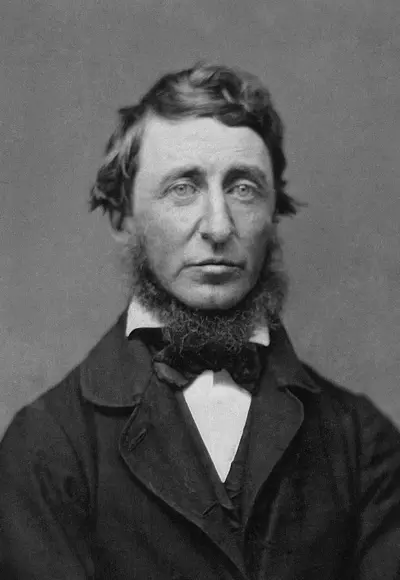
Henry David Thoreau was an American naturalist, essayist, poet, and philosopher. A leading transcendentalist, he is best known for his book Walden, a reflection upon simple living in natural surroundings, and his essay "Civil Disobedience" (originally published as "Resistance to Civil Government"), an argument for disobedience to an unjust state.
