John F. Kennedy Quotes
We must not force an adversary into a choice between humiliating defeat and nuclear war.
John F. Kennedy, 1917-1963, 35th President of the United States (Democrat, MA), Speech 1962
Sourced by: Eigen's Political and Historical Quotations

One new danger that nuclear powers add to the usual problems of conflict, is that a nuclear power, about to lose a war in a humiliating way, might just use his nuclear weapons in revenge. So much damage will be done that the victory turned out to have been a bad thing. So ironically, with a nuclear enemy. Your military dare not win to dominantly with conventional weapons.


The President had asked for the views of the Joint Chief’s of Staff. At the time, the major U. S. defense doctrine depended on our nuclear deterrent which if used against the Russians would have meant mutually assured destruction since they had enough of a nuclear arsenal to destroy America as we know it.


Israel started it nuclear weapons program under Perez’s leadership. They do not admit that it is even in existence. Yet all their potential enemies in the Middle East realize that they have enough nuclear weapons capacity that if they are in danger of being overrun, they can literally destroy the attacking nation and all the countries that might be assisting that nation. Before Israel had developed this capability, some in the Middle East had as their objective to destroy the state of Israel and “drive the Jews into the sea”. No one believes that it is now possible to militarily defeat Israel without the attacking nations also being destroyed. For years, Israel has had the military might to conquer any nation in the Middle East and use their nuclear shield to protect them from any interference, but they have not done so demonstrating that the Israeli governments will not use nuclear weapons for any other purpose.


The Scientific Project that developed the Atomic Bomb


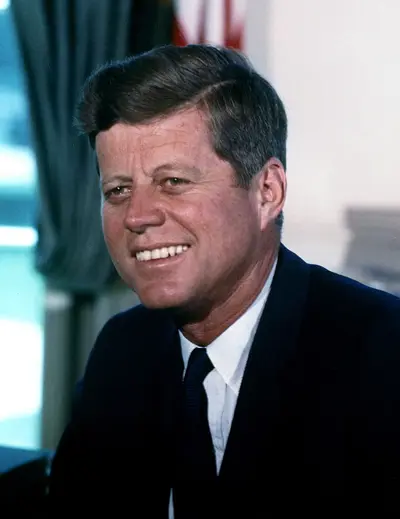
John Fitzgerald Kennedy, often referred to by his initials JFK, was an American politician who served as the 35th president of the United States from 1961 until his assassination in 1963. Kennedy served at the height of the Cold War, and the majority of his work as president concerned relations with the Soviet Union and Cuba. A Democrat, Kennedy represented Massachusetts in both houses of the U.S. Congress prior to becoming president.
