William Howard Taft Quotes
We live in a stage of politics, where legislators seem to regard the passage of laws as much more important than the results of their enforcement.
William Howard Taft, 1857-1930, 27th President of the United States (Republican, OH), Chief Justice of the U. S. Supreme Court, Our Chief Magistrate and His Powers, 1916
Sourced by: Eigen's Political and Historical Quotations


There seem to be many unintended consequences to most new legislation and reform legislation is almost always breaking new ground.

Professor Neustadt had served on the staff of President Harry S Truman so he had a practical perspective from which he spoke in addition to his scholarship.

Responding to a journalists question of whether he understood a bill he had just voted upon:


He, in a speech to Parliament, had criticized the Iranian Judiciary on several counts, He was then reprimanded for doing so.


For complex legislation, there are very few members of Congress who vote on the legislation who could honestly say that they have read the entire bill. Breyer and many others do not see this as a major problem; many others consider it a disgrace that members of Congress will vote for or against a law that they have not even read.


This is the earliest surviving attempt of the Romans to formulate a legal code.

The Czar, a total autocrat, was out of touch with most of the civilized world. Under much pressure from his advisors who realized that there was much unhappiness with an autocracy, the Czar made this reform which seemed a major concession and was very much welcomed by the people. However, it had relatively little practical effect. The Duma could not make laws, they could only ratify those made by the Czar and his ministers. However, few members of the Duma were willing to vote against a measure that the Czar wanted. It had no practical effect on improving the standard of living and the economic development of a backward empire.


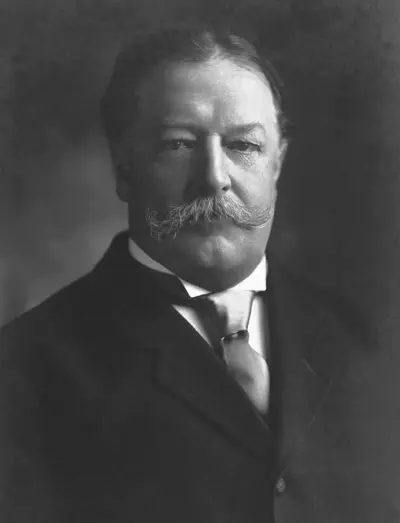
William Howard Taft was the 27th president of the United States (1909–1913) and the tenth Chief Justice of the United States (1921–1930), the only person to have held both offices. Taft was elected president in 1908, the chosen successor of Theodore Roosevelt, but was defeated for reelection by Woodrow Wilson in 1912 after Roosevelt split the Republican vote by running as a third-party candidate. In 1921, President Warren G. Harding appointed Taft to be chief justice, a position he held until a month before his death.
