Wendell Berry Quotes
Politicians quickly learn to pacify the liberals by passing laws and regulations which, to pacify the conservatives, would not be enforced.
Wendell Berry, Farmer, Writer & Critic, “A Man of Courage, Constant to the End”, The Progressive, June 2011
Sourced by: Eigen's Political and Historical Quotations


Spinoza’s ideas were considered so radical and dangerous that he was the only man in history who was excommunicated by the Catholics, the Jews and the Muslims.


He had invited Ted Kennedy to also give a presentation at the library, and this was part of the introduction. The President rarely “jumped” on anyone, but he was referring to the common practice of his fellow Republicans of using Kennedy as the villain in fundraising and partisan attacks.


So far as he was concerned, Republican moderates—his own party members—were liberals. Anyone who did not support the extreme Conservative agenda, was an enemy and a liberal. He and the Tea Party drove almost all the moderate Republicans out of the party.


Actually, there have been “paranoid” fear of opposition political viewpoints in America very often. In the early days of the Republic, the Federalists main concern was not England or other foreign enemies, but Jefferson’s Democratic Republicans. And those Jeffersonians were absolutely convinced that the greatest danger to America was the Federalists who would bring back a monarchy if they could. The Jacksonians triggered a similar polarization. The Civil War stemmed from this extreme. Even America’s most popular President, Franklin Delano Roosevelt, who was elected to 4 successive terms, was perceived as the major “enemy” of America along with his wife Eleanor and the other New Dealers.


Conversations about pollution and environmental safety


as in the case of New Deal legislation struck down by the Supreme Court,


In every case except Obamacare, the Congress would pass technical correctional amendments as programs were implemented and glitches were found. However, with Obamacare, ultra conservatives were strongly opposed to it, and after the law passed over their opposition, they tried (unsuccessfully) to repeal it dozens of times. When technical glitches began to appear, they blocked correcting legislation on the political thinking that the defects would anger people and produce more support for repeal. Trumka observed that the conservatives had also bitterly opposed Social Security in 1936, but in the following years worked to pass correcting amendments and eliminate technical flaws. This was the first piece of major legislation that a substantial number of one of a political party members of Congress tried to sabotage the program and had enough intimidation power over the party leadership and statesmen, that they were enabled.


The country had just gotten rid of Prohibition. However, there was substantial censorship of literature on the part of the Post Office, then a government agency. Abortion was then illegal in every state, and in many states it was a criminal offence to sell or distribute condoms. Homosexuality was a crime in most states and it disqualified a person from Federal employment as did a woman who had borne a child out of wedlock. Films were censored, and in some states, the only legal position for a married couple to have intercourse was the so called “missionary position”. All others were often a crime. Store owners could not open on Sunday, and Christian prayers were compulsory in many areas of society.
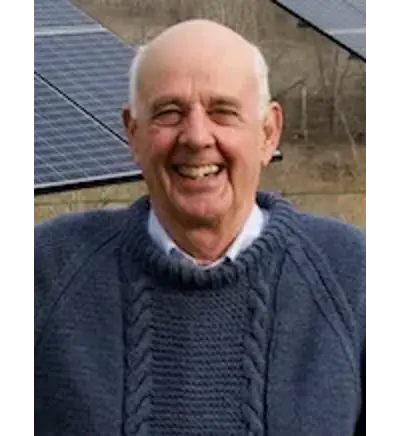
Wendell Erdman Berry is an American novelist, poet, essayist, environmental activist, cultural critic, and farmer. He is an elected member of the Fellowship of Southern Writers, a recipient of The National Humanities Medal, and the Jefferson Lecturer for 2012. He is also a 2013 Fellow of The American Academy of Arts and Sciences. Berry was named the recipient of the 2013 Richard C. Holbrooke Distinguished Achievement Award. On January 28, 2015, he became the first living writer to be inducted into the Kentucky Writers Hall of Fame.
