Thomas Babington Macaulay Quotes
We know no spectacle so ridiculous as the British public in one of its periodical fits of morality.
Thomas Babington Macaulay, 1800-1859, British Historian & Secretary of War (Liberal), Member of Parliament, Literary Essays Contributed to the ‘Edinburgh Review’
Sourced by: Eigen's Political and Historical Quotations


Head of the Sikh Religion. Baba Amar Das had told the Guru that he was a righteous man because he did not eat meat.


3rd Viscount Palmerston. Julius Jacob von Haynau, 1786–1853, was a vicious Austrian General who had committed many atrocities in Italy and Hungary which today would be considered War Crimes and Crimes Against Humanity. He even had women publicly flogged who were heard saying anything sympathetic about the freedom fighters who the General suppressed brutally. On a visit to London, he was attacked and beaten by draymen at the Barclay & Perkins brewery, which he was visiting. (When Giuseppe Garibaldi came to England in 1864, he insisted on visiting the brewery to thank "the men who flogged Haynau.") The Austrian government complained to Queen Victoria about his treatment and the quotation is from the Foreign Minister’s letter reporting the facts to the queen. A letter of apology was sent by Temple to Austria, but it was worded in such a way that it was clear that the English government felt that the beating should never have taken place but it was not morally unjustified. This even angered the Austrians more. Haynau was known and despised by military men the world over. See {630983} for an American use of Haynau’s name.


L. P. Jacks. This seems to be a constant refrain of clergy. philosophers and other intellectuals in almost all eras and nations.
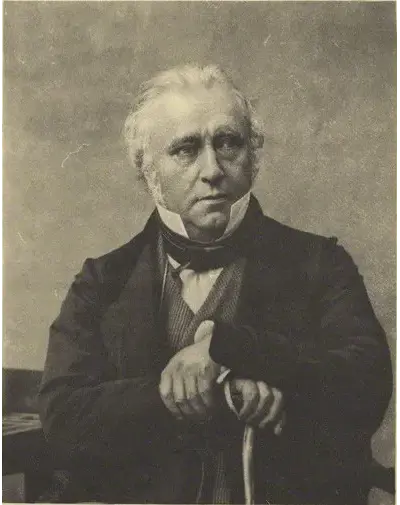
Thomas Babington Macaulay, 1st Baron Macaulay, FRS FRSE PC was a British historian and Whig politician. He wrote extensively as an essayist, on contemporary and historical sociopolitical subjects, and as a reviewer. His The History of England was a seminal and paradigmatic example of Whig historiography, and its literary style has remained an object of praise since its publication, including subsequent to the widespread condemnation of its historical contentions which became popular in the 20th century.
