Robert Osborne Quotes
We in the media have glass jaws. We throw punches at everyone else, and the first time that they hit back, we go down.
Robert Osborne, Columnist, Statement to Tom Browaw, Quoted by Tom Brokaw, NBC Meet the Press, March 3, 2013
Sourced by: Eigen's Political and Historical Quotations


Until the 20th century almost all American political media were shamelessly and overtly biased—left or right. Political Parties had their own de facto publications much like Fox News became for the Republicans in the 21st century. In the 20th century journalism developed into a profession that evolved standards of objectivity in reporting. That norm then prevailed for about 70 years. With the extreme polarization of the later years of the 29th Century the right wing began to accuse much of the media of a left wing bias, and the media tended to react as Krugman describes in this quotation. The model of having spokespersons for “each side” of an issue works for highly subjective political preferences with a two party system, but where it broke down is with scientific and technical issues. On these, there often really are not two scientific points of view, but there is a scientific consensus of the vast majority of scientists and almost all the prestigious and accomplished scientists are in accord. However, there may be some who have a cultural, religious and/or political concern for some science and its implications for society. They in turn find a scientist or two, often one who is unaccomplished and not recognized in the scientific field to argue a different point of view. The media have tended to equate the two and have a “debate” as if there were two sides to the science when there are not. These issues tend to cluster around scientific medical issues involving sex and birth control methods, environment and conservation, evolution, the age of the earth and the method of creation of the universe. The problem is particularly exacerbated by the general scientific illiteracy of the American population and the relatively few journalists who themselves are scientifically literate who can explain scientific issues well.


Samuel Langhorne Clemens, 1835-1910. Grant was the victim of more journalistic errors than most politicians as a number of his appointees turned out to abuse their position for their own gain. Often, Democratic leaning newspapers would claim the Grant was aware of the corruption, sharing in it or both, When there was later proof of Grant’s non involvement, most newspapers would never publish a retraction of correction.

Haldeman had actually called the network executives on several occasions regarding Cavett’s show. Nixon was particularly furious when Cavett interviewed John Kerry, the decorated soldier who had thrown his medals away in protest to the handling of the Vietnam War. Nixon wanted some stronger actions taken.

This quotation appeared in the middle of an 1862 article on the Civil War written by the great writer, Nathaniel Hawthorne. The article had been mailed to the Atlantic Monthly editors in New York from Washington. There were a number of pages of descriptions of specific Cabinet Members and other politicians, their understanding of the issues in the war, and a description of how they spent their time, At the time, it was common for partisan newspapers and magazines to attack politicians of the other party. But the Atlantic, only 5 years old then was a very rare American publication. It was totally non partisan, artistic and literary as well as concerned with current and political events. It only ran articles of serious, (some argued elite) writers. Hawthorn’s material on the politicians was not very complimentary and would have been regarded by them and their supporters as a political attack. So the editors deleted the material that referred negatively to individuals, Their apology was as much to the author, Hawthorne—“our friend”—as it was to the readers. At the time, the New York Times, also non partisan, refrained from serious negative material about politicians and celebrities. This quotation shows us the journalistic and literary standards of the “better” publications of the time. To this day, even when running negative articles about politicians and celebrities, these publications will never use the extreme and sensational language of the New York Daily News, the Chicago Tribune, the New York Post, the National Inquirer, and many other “tabloid” type publications.


At the time there was no Secrecy & Classification System nor any laws enforcing secrecy or confidentiality. However there was no freedom of information laws of expectations even on the part of journalists. This was the first Freedom of Information policy of the American government. Some politicians were more open than others but there was no national, governmental before this. There were however leakers and whistleblowers though the terms were not in use. Note that Roosevelt herein created the first whistle blower protection—himself.

He was responding to criticism that the media was bashing the President.


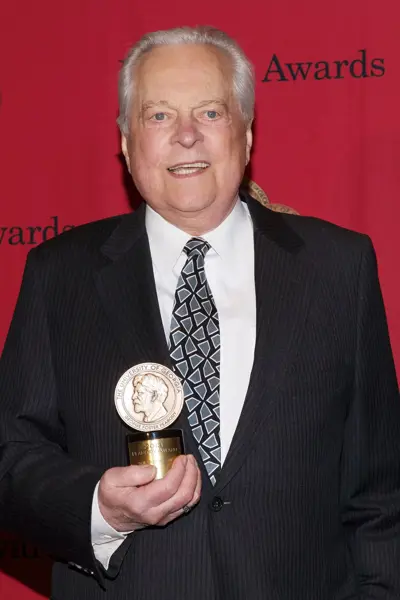
Robert Jolin Osborne was an American actor, film historian, television presenter, and author, best known for more than 20 years as the primary host of the cable channel Turner Classic Movies (TCM). Prior to hosting at TCM, Osborne had been a host on The Movie Channel, and earlier, a columnist for The Hollywood Reporter. Osborne also wrote the official history of the Academy Awards, originally published in 1988, and most recently revised in 2013.
