Hugo Chavez Quotes
We have to re-invent socialism. It can't be the kind of socialism that we saw in the Soviet Union, but it will emerge as we develop new systems that are built on cooperation, not competition.
Chávez, Hugo. Address at the World Social Forum. 30 Jan. 2005, Gigantinho Stadium, Porto Alegre, Brazil.


This was the basic document issued after the Russian Revolution establishing the basic legal and economic structure of the new Soviet State. In one of the great ironies, the Communist state forced people to work, while the capitalistic United States and most of the European Countries so this as an invasion of rights and even provided welfare and other assistance to those who did not work as well as to others.
There had been a major labor strike in the textile mills of Lawrence. Ettor was one of the major strike leaders and strategists. The city authorities sided totally with the mill owners and used police and militia to try and break the strike. When one of the strikers was shot and killed (historians generally agree that the police had fired the shot), the authorities used the death to incapacitate the leadership of Ettor and two other “socialist” leaders who were professional strike organizers and leaders. The 3 were arrested and charged with murder, firing the shot that killed the striker. Ettor and the others were miles away at the time giving speeches to the strikers at another mill. None-the-less, they were arrested, jailed, and not even tried until after the strike was ended. The three were quickly acquitted. The jailing of the strike leaders backfired and made the strikers even more resolute. The laborers finally won the concessions, not to have their pay cut. The defendants went on to lead other strikes.


The “rebate agony” referred to a corrupt practice of the Railroads and the Large Monopolies. The railroads charged a very high rate for the transportation of important products like beef and oil. However, secretly they gave back a large percentage of the transportation rate charged to the trusts. They in turn could cut their prices and undersell all the smaller competitors who were paying “full freight” and could not afford to match the lower price. As soon as the smaller competitors were driven out of business in an area, the trust raised its rates even higher than they charged originally. The Railroad had made a small but reasonable profit on the freight of the trusts but they were guaranteed all their business. They also made huge profits on the higher rates that the small companies paid until those companies were driven out of business. Journalists like Ray Baker and Ida Tarbell had uncovered the rebate scheme which enabled the trusts to steal high amounts from the general public through unreasonably high prices. President Theodore Roosevelt was committed to try and regulate the railroads and not allow rebates but charge the same public rate to all with no rebates. Socialists like Sinclair, thought that this attempt would be hopeless—that the damage had already been done, and the trusts now had so much money that they could buy state legislatures and many in Congress to preserve their dominance.


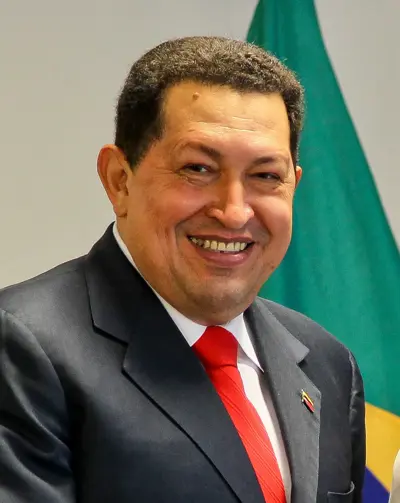
Hugo Rafael Chávez Frías was a Venezuelan politician who was president of Venezuela from 1999 until his death in 2013, except for a brief period in April 2002. Chávez was also leader of the Fifth Republic Movement political party from its foundation in 1997 until 2007, when it merged with several other parties to form the United Socialist Party of Venezuela (PSUV), which he led until 2012.
