Bryan Stevenson Quotes
We have made finality more important than fairness. We shield even clear violations of people's rights if objections aren't raised at the right time in the right way.
Prosecutors, even ones who are frequent lawbreakers themselves violating defendant's rights or illegally manipulating trials, are reluctant to be officially found to have done so. Many politicians start their political careers as prosecutors and then rise to higher office. If it is officially found that they had abused a defendant and violated the law, it can be detrimental to their careers. So in many states, they have placed barriers making it much harder for an improperly convicted person to even get a court hearing. The cost to society however is that they are never accountable, and people have been wrongly imprisoned and cannot even get a hearing to prove that they were the victims of official misconduct. The rationale for these rules that prevent victims from obtaining fairness and justice is finality—the concept that there should be some end to the process of appeals so justice can be said to have been done. It prevents a kind of closure for many of the victims of crimes and their families if the guilty perpetrator is constantly appealing or can do so.
Bryan Stevenson, Legal Scholar & Educator, Founder & Executive Director of the Equal Justice Initiative, Interview, The Progressive, December 2015 / January 2016
Sourced by: Eigen's Political and Historical Quotations


Hill was tried for a murder he claimed he didn’t commit, but he refused to take the stand and explain his gunshot wound. He refused to provide the names of the people who were involved in his shooting. By today’s legal standard there was no proof of his guilt, but his refusal to testify or even provide the information to the Governor after his conviction. He was executed by Utah by firing squad in 1915.


He was discussing the military criminal cases ongoing regarding the mistreatment of Iraqi detainees.


Americans are divided as to whether this should be encouraged and helped or not.


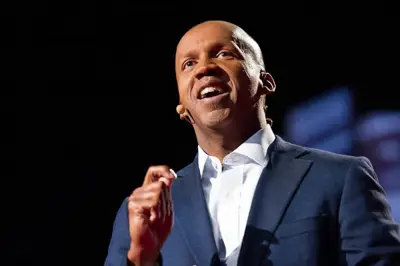
Bryan Stevenson is an American lawyer, social justice activist, founder/executive director of the Equal Justice Initiative, and a law professor at New York University School of Law. Based in Montgomery, Alabama, Stevenson has challenged bias against the poor and minorities in the criminal justice system, especially children. He has helped achieve United States Supreme Court decisions that prohibit sentencing children under 18 to death or to life imprisonment without parole. Stevenson has assisted in cases that have saved dozens of prisoners from the death penalty, advocated for the poor, and developed community-based reform litigation aimed at improving the administration of criminal justice.
