Alex Kozinski Quotes
This is really a pretty good system you have here. What do you call it? "Due process". We're very proud of it.
Kozinski, Alex. Dissenting opinion. United States v. Ramirez-Lopez, 315 F.3d 1143. United States Court of Appeals for the Ninth Circuit, 9 Jan. 2003, p. 1160.


Prosecutors, even ones who are frequent lawbreakers themselves violating defendant's rights or illegally manipulating trials, are reluctant to be officially found to have done so. Many politicians start their political careers as prosecutors and then rise to higher office. If it is officially found that they had abused a defendant and violated the law, it can be detrimental to their careers. So in many states, they have placed barriers making it much harder for an improperly convicted person to even get a court hearing. The cost to society however is that they are never accountable, and people have been wrongly imprisoned and cannot even get a hearing to prove that they were the victims of official misconduct. The rationale for these rules that prevent victims from obtaining fairness and justice is finality—the concept that there should be some end to the process of appeals so justice can be said to have been done. It prevents a kind of closure for many of the victims of crimes and their families if the guilty perpetrator is constantly appealing or can do so.


He was discussing the military criminal cases ongoing regarding the mistreatment of Iraqi detainees.

The Senator was arguing against a bill to correct an aspect of the immigration law where infants and very young clildren are broght to the United States by parents who entered illegally. The children grow up in the United States—the only country and home that they have ever known. American law required that they be deported to “their countries” which they have no memory of and many do not even speak the language or know the culture. Sessions, is an example of the view that law defines justice. Therefore laws cannot be unjust nor can enforcing the law. Opponents point out that even in the United States we have, in earlier times, “enforced the law” which we came to regret and see as an injustice. The Fugitive slave laws, the Southern racial discrimination laws, and the law allowing Japanese American Citizens to be interned and lose their land during WWII are a few examples of laws, the enforcement of which is seen by most Americans as having been unjust. The execution of “witches” in early America was in conformity with the law.

This quotation shows that “due process” was an important principle for the colonists long before the American Revolution and the Constitution and Bill of Rights. Rights. Connecticut and New York passed similar laws after Massachusetts.

This quotation is a great example of the difficulty of deciding some of the major Constitutional issues. Most reasonable people believe that Rehnquist certainly has a point. On the other hand, critics observe that this quotation essentially says that it is OK to convict an innocent person if it cost too much or be too much trouble to do so. Reasonable people would also agree that this objection has much merit also. So the judicial system is stuck with deciding when the cost or trouble is too much. There will never, can never, be a clear cut answer.

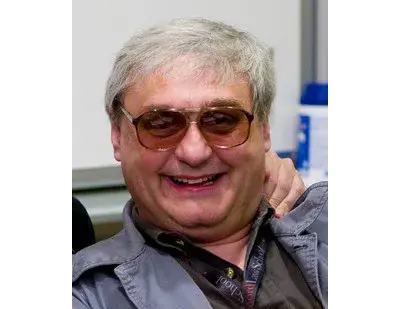
Alex Kozinski is a Romanian-born American jurist and lawyer who was a judge on the U.S. Court of Appeals for the Ninth Circuit from 1985 to 2017. He was a prominent and influential judge, and many of his law clerks went on to clerk for the U.S. Supreme Court.
