Martha Griffiths Quotes
It is a different world and they [the Supreme Court] should speak for justice, not prejudice.... I seek justice, not in some distant tomorrow, not in some study commission, but now while I Iive.
Griffiths, Martha. "Equal Rights for Men and Women." Congressional Record, vol. 116, 10 Aug. 1970, p. 28005.


The power structure of England and the English administrators of South Africa were strong advocates of racial equality at the beginning of the 19th century. They insisted on equal administration of law. However the Boer white population could think of nothing more absurd. In a sense the Boers were much like the Southern Whites at the same time. The South African government however could not enforce its equality policies in the rural area – the majority of South Africa at the time. When democracy and self rule came to South Africa, the racially moderating force of the English was minimized and the majority of South Africans wanted a racially segregated society. Apartheid resulted.


The Senator was arguing against a bill to correct an aspect of the immigration law where infants and very young clildren are broght to the United States by parents who entered illegally. The children grow up in the United States—the only country and home that they have ever known. American law required that they be deported to “their countries” which they have no memory of and many do not even speak the language or know the culture. Sessions, is an example of the view that law defines justice. Therefore laws cannot be unjust nor can enforcing the law. Opponents point out that even in the United States we have, in earlier times, “enforced the law” which we came to regret and see as an injustice. The Fugitive slave laws, the Southern racial discrimination laws, and the law allowing Japanese American Citizens to be interned and lose their land during WWII are a few examples of laws, the enforcement of which is seen by most Americans as having been unjust. The execution of “witches” in early America was in conformity with the law.


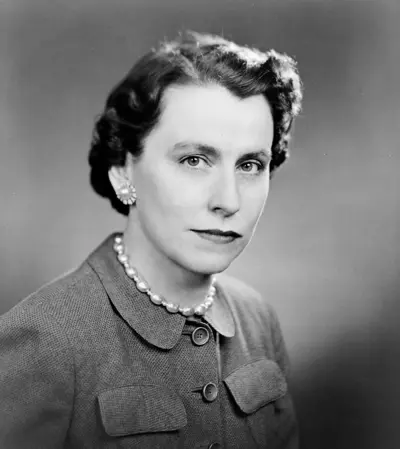
Martha Wright Griffiths was an American lawyer and judge before being elected to the United States House of Representatives in 1954. Griffiths was the first woman to serve on the House Committee on Ways and Means and the first woman elected to the United States Congress from Michigan as a member of the Democratic Party. She was "instrumental" in including the prohibition of sex discrimination under Title VII of the Civil Rights Act of 1964. In 1982, Griffiths was also the first woman elected Lieutenant Governor of Michigan, as Matilda Dodge Wilson had been appointed the first female Lieutenant Governor of Michigan in 1939.
