Antonin Scalia Quotes
We have laws against torture. The Constitution says nothing whatever about torture. It speaks of punishment; 'cruel and unusual' punishments are forbidden.
Scalia, Antonin. Interview by Law in Action. BBC Radio 4, 12 Feb. 2008.


When TR came to office, the U. S. was in the midst of war with Philippine insurgents who were fighting an asymmetric , guerrilla war against the U. S. Army. The war had become very brutal with the insurgents using terror and atrocities and some Army units executing prisoners and torturing captives. Roosevelt, actually fired the General who was in charge of the field troops rather than just discipline lower level officers as usually has happened.

This was untrue. The CIA used several forms of torture on high value detainees. The torture was psychological and physical. Even the FBI had agents who observed CIA interrogations and complained to their supervisors. For cover, the George W. Bush administration, got 3 Justice Department Attorneys to write a secret memo defining certain types of torture as “enhanced interrogation”. Water Boarding, for which American soldiers had been court martialed and convicted for torture then became enhanced interrogation, and was used on a few terrorists. Because of the rigged Justice Department memo, the CIA claimed that they did not torture people. Another thing the CIA did was to turn over enemy to the intelligence services of third countries like Egypt, where torture was used commonly with no regard for the Geneva convention or other human rights provision. CIA agents then watched and asked questions but they claimed that they did not torture which was in some sense literally true.


The press were asking about the claim that the United States were sending detainees (“rendition” it is called) in the War on Terrorism to countries where they are tortured in ways that United States law prohibited. This quotation is an excellent illustration of the nuanced language that is sometimes used by politicians with the press. For example this statement was made in the Press Conference about our Human Rights Annual report. In it specific countries were named and accused of torturing prisoners or suspects. The press had learned that detainees had been renditioned to those same countries. Lowenkron went on to explain that U. S. officials had explained to officials of the countries to which detainees had been renditioned that the detainees should not be tortured; therefore they did not BELIEVE that they would be. So the statement was “correct” whether or not they detainees had been tortured. In another nuance, some people wondered what “we” meant—the United States or the State Department. Perhaps the State Department followed this policy and practice but the CIA may not have.

It is surprising that these ideas would come from one of the most autocratic powerful monarch in the world at the time. However there were many very liberal influences on her from Europe. This set of proposals she even sent to Voltaire to get his feedback and criticism. As late as 2006 the American President was reluctant to outlaw torture for terroristsand the Vice President actually argued for its retention as an interrogation technique. Over 300 years earlier the autocrat of Russia argued against it.

The Senate was debating a law to make torture of foreigners and captives illegal under all circumstances. Vice President Cheney was very strongly opposed wanting an exception made for the CIA.

Major Fleener had been assigned to defend accused terrorists who were being held at the military prison in Guantanamo, Cuba. For several years they were held without a hearing or trial. Then the U. S. Supreme Court ruled that they had to be given a hearing or trial. A Military tribunal was selected. The methods and procedures of these hearings came under much public world-wide criticism as they did not meet the normal legal standards of most countries. Surprisingly, one of the military officers made public statements criticizing the army and the trials.

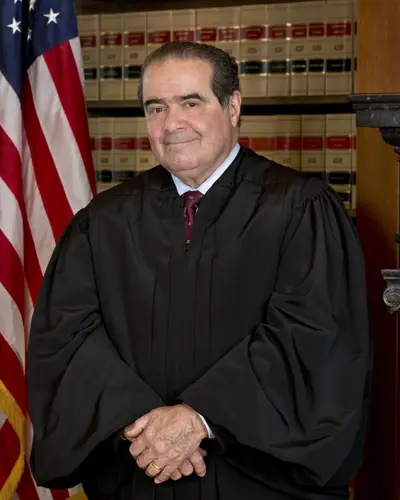
Antonin Gregory Scalia was an American jurist who served as an associate justice of the Supreme Court of the United States from 1986 until his death in 2016. He was described as the intellectual anchor for the originalist and textualist position in the Court's conservative wing. For catalyzing an originalist and textualist movement in American law, he has been described as one of the most influential jurists of the twentieth century, and one of the most important justices in the Supreme Court's history. Scalia was posthumously awarded the Presidential Medal of Freedom in 2018 by President Donald Trump, and the Antonin Scalia Law School at George Mason University was named in his honor.
