Harry S. Truman Quotes
We have gone a long way toward civilization and religious tolerance, and we have a good example in this country. Here the many Protestant denominations, the Catholic Church and the Greek Orthodox Church do not seek to destroy one another in physical violence just because they do not interpret every verse of the Bible in exactly the same way. Here we now have the freedom of all religions, and I hope that never again will we have a repetition of religious bigotry, as we have had in certain periods of our own history. There is no room for that kind of foolishness here.
Truman, Harry S. "Address to the Washington Pilgrimage of American Churchmen." Public Papers of the Presidents of the United States: Harry S. Truman, 1951, U.S. Government Printing Office, 1965, p. 544.


Martin wanted William Howard Taft to answer questions about his religious beliefs. Taft was TR’s selection to be his successor. Ironically, a starting with John F. Kennedy, many presidential candidates have been asked about their religious belief’s and have answered whereas Roosevelt would have them not reply to such inquiries.

He is a Greek Orthodox Christian, and he correctly observes that the Islamic world was considerably more tolerant than the Christian until the 18th century when Islam had become less tolerant in the Middle East while the Christians were modernizing and going through a cultural and intellectual enlightenment and societal modernization while the Muslims, became less tolerant than they were in earlier years leading to the modern situation.


Henry of Navarre. This edict made the Huguenots and other Protestants legal in France whereas only 26 years earlier 50,000 of them had been slaughtered in France by the Catholics. It wasn’t a century before the Catholics reneged. See {617765}.

Muslims had engaged in violent demonstrations to insist on more Sharia law and the curtailment of behavior that the Muslim Mullahs determined to be contrary to Sharia and Islam. In Nigeria Muslim violence and intimidation had at the time already caused one of the Nigerian states to adopt Sharia instead of civil law. Many Muslims continued the violence in order to spread the adoption of Islamic law. In most counties, there were threats of law enforcement crackdowns to curtail the Muslim violence and attacks on Christians and other religions. In Nigeria however, the Christians under Akinola’s leadership made this not so subtle veiled threat to retaliate. It seems to have worked in the short run although the religious tensions remained very high and no one knew whether or not religious violence or even war would break out.

Despite this clear statement, later the Colonial legislature withdrew the franchise from Roman Catholics. See {624149}. Despite this temporary restriction of religious freedom, Rhode Island and Connecticut were far ahead of the other New England colonies in freedom of conscience.


Wesley had been to Island several times and was interested in affairs there. He was a strong advocate of freedom of religion but the violence of the earlier religious conflict made him very wary of the Irish Roman Catholics who seemed to him particularly prone to religious violence.
Not all the relations between Irish Catholic and Protestants were hostile. There was a commonality in their Irish nationality and many protestants—especially the educated and more sophisticated—were opposed to the restrictions imposed by England on the rights of the Roman Catholic to practice their religion. See {639274} for another example.


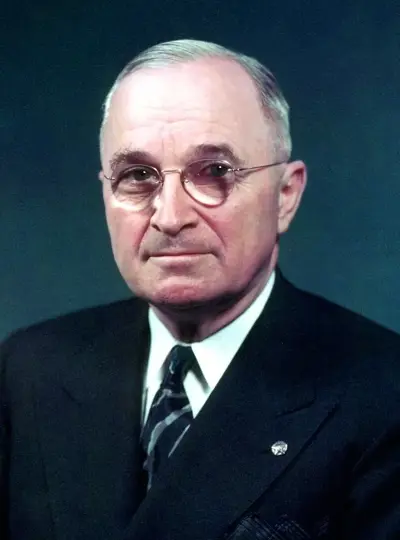
Harry S. Truman was an American politician who served as the 33rd President of the United States (1945–53). He served as a United States Senator from Missouri (1935–45) and briefly as Vice President (1945) before he succeeded to the presidency on April 12, 1945 upon the death of Franklin D. Roosevelt. He was president during the final months of World War II, and approved the plan to drop atomic bombs on Hiroshima and Nagasaki. Truman was elected in his own right in 1948. He presided over an uncertain domestic scene as America sought its path after the war and tensions with the Soviet Union increased, marking the start of the Cold War.
