Tom C. Clark Quotes
We find greedy men, blind with the lust for money, trafficking in human misery.
Thomas C. (Tom) Clark, 1899-1977, U. S. Supreme Court Justice, U. S. Attorney General (Democrat), Speech, Boston Chamber of Commerce, October 8, 1947
Sourced by: Eigen's Political and Historical Quotations


Modern slavery involved forced prostitution, child labor and various forms of indentured servitude together with importing illegal workers and threatening to have them deported if they complain or go public about their slave labor conditions.


The “lords of the lash” were the Southern slave owners. The “lords of the loom” were the Northern mill owners. The Southern cotton, grown by cheap slave labor was sold to the Northern mill owners at very low prices. They in turn wove the cotton into cloth and sold it throughout the nation and to foreign countries. So, although there was strong Northern anti-slavery sentiment, the wealthy and politically powerful mill owners had a vested interest in maintaining slavery in the South.
None was forthcoming. This letter is of great historical interest in that it shows the corrupting influence of slavery on all facets of society.


This was written under the name of Ragnar Redbeard. There are a few scholars who believe that it was written by Jack London, but most credit Desmond.


Clark, after becoming one of the richest men in America, wanted to go into National Politics, but most people hated him so he could never win elected office. At the time, Montana selected their Senators by a vote of the State Legislature. So Clark bribed enough members of the legislature to become the Senator. However, the bribery scheme became a public scandal and the Senate refused to seat him. So the legislature had another vote in the next legislative session and Clark won again, and that time no one had the evidence of the bribes. But then, more about Clark became known, and he just served the one term.

In 1811 Calhoun was a freshman congressman. Congress was considering raising 10,000 men to resist the encroachments of Great Britain. The large cost of the enterprise was preventing the measure from passing. Calhoun objected to considering the cost factor at all:
The Southeastern states were in a triple bind regarding slavery. The slave trade was ended so new slaves could not be imported. The existing slaves commanded much higher prices in the West and were sold to those destinations. Meanwhile, the European abject poverty provided a ready source of immigrants who would work for wages that were not much more than the cost of keeping and amortizing a slave. At the beginning of the Civil War, the death knell of Southeastern slavery had already been ringing.
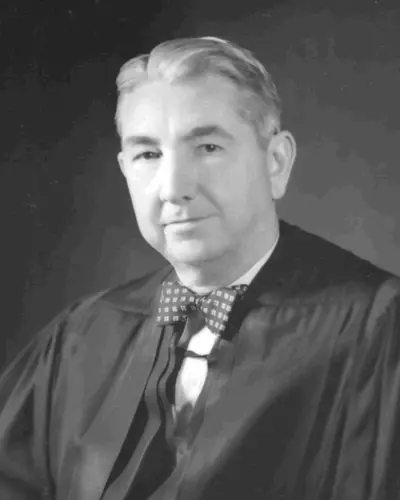
Thomas Campbell Clark was an American lawyer who served as the 59th United States Attorney General from 1945 to 1949 and as an Associate Justice of the United States Supreme Court from 1949 to 1967.
