Ed Miliband Quotes
We don't compete in the world by offering tax advantages to a few that we don't give to all our citizens and businesses
Miliband, Ed. "Speech on Tax Avoidance." The Guardian, Guardian News & Media, 15 Feb. 2015.


As a result of years of lobbying many vested interests were getting tax exemptions for their activities. Some of the richest corporations and people paid little or no taxes. This was like the old European monarchies where the dukes and nobles got tax exemptions from the king and the middle class and poor people paid a much larger percentage of their income and wealth than did the nobility. Fairness in taxation is very difficult in practice. See {633629}

Corporate and business taxes were anathema to Republicans in 1899 as they were a century later. Roosevelt shocked the Republican base with statements like this, and when he implemented them, he became the most popular politician in America—possibly even more so than George Washington.


The founder was Charles E. Coughlin, 1891-1979, a demagogic Catholic Priest who drafted the principles and invited others to join him. Hundreds of thousands did in this organization which began in idealism, and ended in scandal and hate mongering, so much so that Father Coughlin was ordered off the radio and out of politics by the Catholic Church. The National Union in 1936 had morphed into the Union Party which ran Presidential candidates in the 1936 election. At the time, a progressive income tax was an anathema to most people, however it became the norm in later years and although the idea did not originate with the Union, was one of the few lasting contributions of the Union.


Describing the concept of an income tax:

FDR had as usual been attacked by the Chicago Tribune and other conservative newspapers. His assistant Raymond Moley drafted the response.

The George W. Bush administration when they had a Republican-controlled Congress, had amended the tax laws to treat the earnings of the hedge fund managers differently from people who manage other enterprises in the nation. They gave a group of very wealthy managers whose earnings were already amongst the highest of any managers in the country a huge tax break, while little public attention was paid to the subtlety of complex tax laws. Daschle and others began to draw public attention to the inequity.

This became known as the Buffet Principle—that the very rich should not pay a lower tax rate than the workers who make far less money than they do. President Barack Obama used this principle by name in calling for the 2011 Jobs Act which would eliminate some of the loopholes and exemptions by which the rich could avoid some or much or their tax obligation.
At the time, he, th richest man in America was paying a lower ta rate than his secretary, his employees and the waiter who served him lunch. The “Buffet Rule” was developed and named for him that said that wealthy people should pay a minimum rate of taxation regardless of tax credits, deductions and other means of tax avoidance.

whether or not to buy luxuries This quotation and {639885} together illustrate why it is so difficult to classify historical politicians in the left-right categories of a future time. Here Gogel seems a strong liberal arguing for progressive taxation and luxury taxes, and tax relief for the poop, while in {639885} he sounds like a 21st century extreme conservative.
Even on Medieval days in Europe, the wealthy barons paid lower tax rates that their lowest peasants. Relief from taxes was one of the privileges of the very rich. The practice has been made more cosmetic, but the result seems to have been the same into the 21st century.


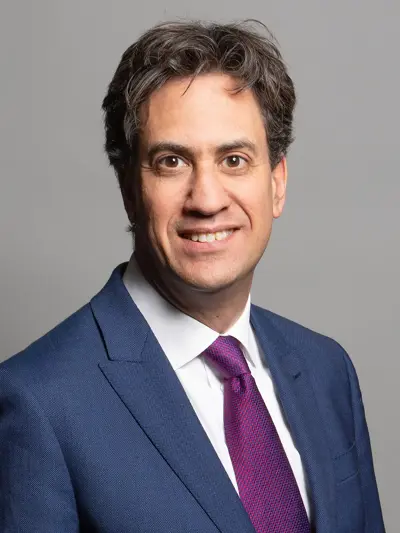
Edward Samuel Miliband is a British politician serving as Shadow Secretary of State for Business, Energy and Industrial Strategy since 2020, and has served as Member of Parliament (MP) for Doncaster North since 2005. He was previously Leader of the Labour Party and the Leader of the Opposition between 2010 and 2015, resigning after Labour's defeat at the 2015 general election. Alongside his brother, Foreign Secretary David Miliband, he served in the Cabinet from 2007 to 2010 under Prime Minister Gordon Brown.
