John T. Noonan Jr. Quotes
… we conclude that the [Federal] Reserve Banks are not federal ...but are independent privately owned and locally controlled corporations...without day to day direction from the federal government
John T. Noonan, Jr., Federal Appellate Judge, Lewis v. United States, 9th Circuit Court, No. 97-{15987}, 1998
Sourced by: Eigen's Political and Historical Quotations


Jefferson was of the opinion that a central bank was unconstitutional and that it was a great economic danger to the nation, a view also held later by President Andrew Jackson.


Hamilton, then the Treasury Secretary, had proposed the creation of a national bank with the seemingly incredible notion of having it run by private individuals and not responsive to Congress. The experience of Europe and the individual states convinced Hamilton and some others that no government, monarchy or republic, could resist the temptation to print money rather than deal with basic economic problems. If in private hands, and least to protect their wealth, the bankers would not debase the national currency. Hamilton’s view actually prevailed with some Jacksonian adjustments and interruptions along the way. Today, the Federal Reserve Banks are to a great extent private. But neither Congress nor the President can control the money supply. There are some who object for just the reason that they feel that in a democracy all the levers of government should be under the control of the representatives of the people.


This was in the midst of the debate over The Recharter Of The Bank bill


After the Great Recession the Mexican bankers, like their American counterparts, tightened their credit standards so much that the only people who could get loans were the ones who didn’t need it. If banks do not make loans, it matters not that they are solid institutions that are well capitalized.

Greenspan and some others assumed that the shareholders and the executives who ran the financial institutions had the same vested interests. But the executives had disconnected themselves from the fate of the shareholders, by having Golden Parachutes to protect the executives even if the business failed and they were fired. And they got their bonuses immediately so by the time the authorities and the shareholders discovered that the profits the bonuses were paid for were illusory, the bonus money was safely stored in a secret offshore bank. But if things went wrong, there was always the play of getting a government bailout which would keep the executives getting their huge bonuses and keep the shareholders from losing their money as the taxpayers covered most of the losses.

This warning was a decade before the Meltdown of 2008, but was not heeded by any of the politicians. As a result a number of the companies that made all those risky decisions assumed that if something went terribly wrong the government would not let them fail. Unfortunately, they were right and the taxpayers spent billions to prevent companies from failing. After the meltdown all the politicians vowed to end the too big to fail concept, but while some improvements were made, the Congress could not come to agreement, and the markets and a number of companies think that they are still too big to fail. This is particularly true for Defense Contractors where the government has and probably will in the future, protect irresponsible companies from failure if they are the only company that makes needed weapons and other equipment.

The savings and loan crises became clear shortly thereafter.


The Bank was privately owned. Jackson was a major opponent of the Bank. See his description {630650} .

While business generally pays much more than Federal service, there are many brilliant people in the government who are not primarily motivated by making the most possible money. NIST for example had two Nobel Prize winners, and several others have served in the National Institutes of Health. Some of the best economists have worked for the government, and the military is full of outstanding men and women of intellect. But generally, with its higher salaries, the private sector has the recruiting advantage though not to the degree Regan implied.
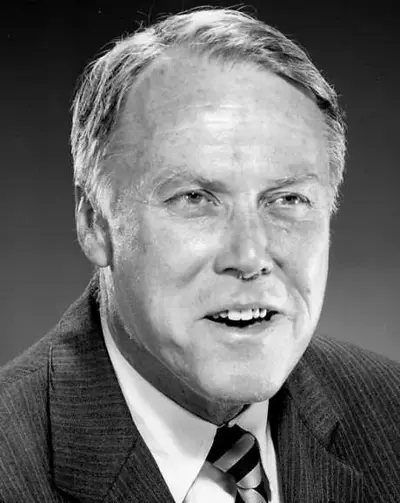
- Born: October 24, 1926
- Died: April 17, 2017
- Nationality:
- Profession:
John Thomas Noonan Jr. was a United States Circuit Judge of the United States Court of Appeals for the Ninth Circuit.
