Martin O'Malley Quotes
We can't expect Wall Street to police itself - that's why we have a federal government.
O'Malley, Martin. "Speech on Wall Street Reform." New York, 9 July 2015. Speech.


At the time, the financial industry spent more money for lobbyists and campaign contributions than any other sector of the economy. The result is that they had extraordinary access to and influence upon members of Congress and their staffs, that more often than not, the actually drafted the language for laws, amendments and regulations and then les the strategy to pass the legislation or finalize the rule. Moreso than any other industry, they wrote their own rules. Even after the Meltdown of 2008 and the Great Recession where there was a public outcry for reform, the Dodd Frank legislation was influenced by the industry and after passage most of the rules and interpretations were written by the industry or greatly influenced by them.


Greenspan and some others assumed that the shareholders and the executives who ran the financial institutions had the same vested interests. But the executives had disconnected themselves from the fate of the shareholders, by having Golden Parachutes to protect the executives even if the business failed and they were fired. And they got their bonuses immediately so by the time the authorities and the shareholders discovered that the profits the bonuses were paid for were illusory, the bonus money was safely stored in a secret offshore bank. But if things went wrong, there was always the play of getting a government bailout which would keep the executives getting their huge bonuses and keep the shareholders from losing their money as the taxpayers covered most of the losses.


The Consumer Finance Protection Bureau was established over much Conservative opposition in the reforms that were established in the wake of the Meltdown of 2008 and the Great Recession. And the Republican Party was critical of everything that it did. The issue of whether or not the Federal government should even have a role in consumer protection was been debated for over a century. This quotation is very ironic in that the first major federal legislation to assist American consumers was pushed though by Republican President Theodore Roosevelt. Over 100 years later, it was the Republican Party that fought to weaken or eliminate Federal efforts. Ryan, the Republican legislative leader, led the effort. Ironically, most businesses agreed with him about the micromanagement as it was they who had to change their modes of operation to comply with CFPB regulation, but the vast majority of consumers did not feel that they were being micromanaged although many agreed that the companies interacting with consumers were certainly being managed much more tightly.

She had warned about the unregulated derivatives 10 years earlier, but to no avail. See {637987}. Then when she had been proven prescient in the Meltdown of 2008, Congress was more interested in how she thought they could prevent future problems with derivatives. Some were adopted but not all. The financial institutions claimed that they needed derivatives to hedge positions and hence “stabilize” the system. Of the members of Congress who voted on this issue, almost none understood derivatives and credit default swaps were and how they worked. But some were sure they were bad, and others were sure that they were necessary for stability. Derivatives can, and did, get so complicated that the people who originally created them sometimes cannot tell whether they are at risk or not. Even computer cannot calculate the value and risks of these instruments because the values and risks depend on what happens to other companies or instruments which themselves have derivatives insuring them. See {620038} for a good description of the difficulty.
Greenspan accepted this as many other economists and financial regulators did. What they did not take into account was the incredible greed of many of the financial executive who were betting with their customers money, If the bet was right they, the shareholders and the customers all made out very well as they were highly leveraged. If the bet was wrong, the shareholders and customers lost a lot, and the financial executives only made their multimillion dollar salaries and bonuses (Many were actually were guaranteed their bonuses even if they put the company into bankruptcy.) Worse, they earned their money when they made their sales or earnings targets, but when the securities they bought went sour, even if the company had no funds left, the. It was “heads we all win and tails only I win.” The vested interests between the financial company executives, the shareholders, and the clients were divergent, and the customer was at the bottom of the money pole.


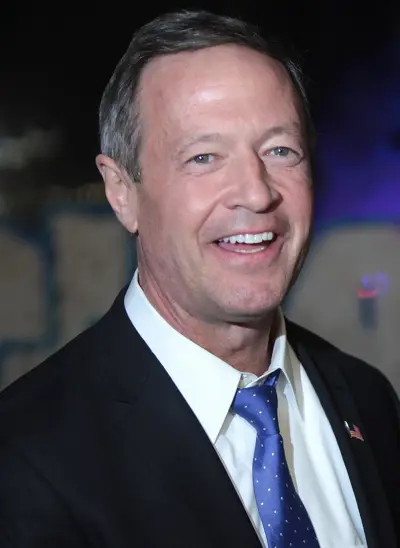
Martin Joseph O'Malley is an American politician and attorney who served as the 61st Governor of Maryland from 2007 to 2015. A member of the Democratic Party, he previously served as Mayor of Baltimore from 1999 to 2007, and was a councilman from the Third Council District in the northeast section of the city on the Baltimore City Council from 1991 to 1999.
