Robert Toombs Quotes
We can today open wide the history of their administrations and point with pride to every act, and challenge the world to point out a single act stained with injustice to the North, or with partiality to their own section.
Toombs, Robert. Speech of Hon. Robert Toombs, Delivered in Milledgeville, on Tuesday Evening, November 13, 1860, Before the Legislature of Georgia. Boughton, Nisbet & Barnes, State Printers, 1860.


The American Civil War was followed by intellectuals throughout the world. Most were offended by the immorality of the slavery that the South was fighting to maintain, but admired the way they organized and fought for their principles.

The Governor was a staunch Confederate supporter but his state legislature majority favored the Union. He was forced out of the governorship when the 1861 election gave the legislature a veto-proof pro Union majority.


Buchanan us considered by most historians to have been the worst or one of the worst Presidents of the United States. At this point, he was a lame duck president with Abraham Lincoln, the President Elect soon to take office. This speech, just encouraged the South more than ever and helped to bring about the Civil War. His vacillation and lack of any leadership on the slavery question exacerbated the polarization that was tearing the nation apart.


The economic advantage of the North over the South in the Civil War is well known. Not so well-known is the huge technological advantage that the North had. This quotation gives an indication of the extreme difference. The North fought the war on all fronts including the technological one where no weapons and methodologies from the telegraph to the military railroad were critical. The South by contrast did not have the manpower to fight the war and keep industry and scientific technological development going also.

While this assessment was true up until the 1980s. By the 21st century there were almost no serious historians who thought that the motivation of the Confederate States for the Civil War was anything but slavery and the economic impact that abolition might bring. However, one of your advantages having this collection of historical quotations is that you can see for yourself why the Southern states say they were seceding. This following are four of the official secession resolution documents. Read these and you will see that all the claims that there were other major reasons for secession are just attempts to make the Confederacy a little less brutal and greedy. See {621371}, {619793}, {621372}, {621375}

After the Presidential years of James Buchanan who protected the South from slavery reform and abolition as the North was gaining political power and the abolitionists were having a greater and greater effect on public opinion in the North. While Southerners did not believe Lincoln would emancipate the slaves, they realized that the majority of the growing nation was opposed to slavery, and more and more Northern states were passimg laws making any slave who sets foot in the State a free person. Slaves coud not only have more reason to run away, but slave owners would not be able to get their “property” back. Lincoln would not help the South as Buchanan did, and the Southerners realized that over time, slavery would no longer be feasible or profitable. Cobb, very experienced at Washington politics, realized the changes that would come and thought that they would be “certain and speedy.” The irony was that if the South had not seceded and simply dragged its feet legislatively, it would have taken two or three decades for slavery to end. However, by seceding and initially fighting so hard and well while poor Union generals were in command, Lincoln was forced to try more drastic measures and issued the Emancipation Proclamation after only a few years. The Civil War and seccession was not only a tactical and strategic error for the South, but rapidly brought about just what the Southerners were fighting to prevent.


The Southern states were illegal rebels. A confederacy had always meant a voluntary association of otherwise independent entities. However technically the Southern states were not independent but in a state of illegal rebellion against the United States. Lincoln, a lawyer, could not being himself to refer to the South by their preferred name—the Confederacy. So this was how he and many in his administration referred to the South.
The letter was also published in the Charleston Mercury, February 13, 1861


I should sooner remain in Southern bondage than avail myself of the opportunity of Northern freedom.
Hughes was a strong critic of the exploitation of laborers in the North by what he called the “bloated capitalist” First Irish Bishop in the United States
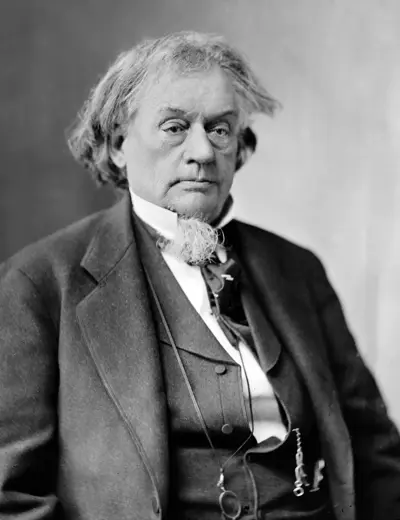
Robert Augustus Toombs was an American lawyer, planter, and national politician from Georgia who became one of the organizers of the Confederacy and served as its first Secretary of State under President Jefferson Davis. He also served in the Confederate States Army, but later became one of Davis' critics. After the Confederate defeat, Toombs fled the United States. He did not return until 1867, after his daughter's death. He regained political power in Georgia as Congressional Reconstruction ended in 1877.
