Henry Clay Frick Quotes
We bought the son of a bitch, but he didn't stay bought.
In 1904, candidate Theodore Roosevelt solicited campaign funds from leading businessmen. After he was elected, he was viewed to have "turned" on them since he attempted to curtail monopolistic excess, instituted regulation, and made other business reforms. This is the original remark, but another, more sanitized version appeared in New York Times and other places as: “We bought him and he did not stay bought.”
Henry Clay Frick, 1849-1919, Industrialist, remark quoted in various newspapers.
Sourced by: Eigen's Political and Historical Quotations


Abramoff had bribed over 100 Congressional offices by a combination of campaign donations, paid golf junkets all over the world, free elegant meals at his own fancy Washington Restaurant, free tickets for the Congressmen, their staffs and their major constituents, to Concerts and sporting events including his own Skyboxes, and promises of future employment at very high salaries. Ironically, we was convicted of cheating some of his lobbying clients and did a jail term, but his “bribery” was technically usually legal. In addition to Abramoff, only one Congressman was charged and convicted of corruption, when many if not most had engaged in these corrupt practices. Congress makes the rules with loopholes so that what is bribery and corruption in any other setting is often not against the law if Congress is involved.

He held up tools made by the Stanley Tool Company which had announced that they were relocating to Bermuda to avoid paying American taxes. The company changed its mind after this sort of publicity.


See {640687}. He was then very worried about the influence of money in politics and was willing to risk his own reelection by limiting his contributions. And he was the Republican presidential candidate so his policy was particularly unusual. A century later money in politics had ballooned to a much larger problem as Taft’s action had little or no effect on the overall relationship between money and politics outside of his campaign.


Bryan had reached the point where he advocated public financing of campaigns.


The bill passed, but Jackson, true to his word, vetoed it.

Norquist, Abramoff, and Congressman Tom Delay had created a shakedown scheme to extract money for Republicans from lobbyists and to punish any who donated to Democrats. Although Norquist wanted 50 more, Abramoff was convicted and sentenced to jail in one of the biggest political scandals in modern times. Delay also was indicted.

Arnold was not just any senior officer, but one who had been a great fighter against the British not only, leading his men brilliantly but exposed himself to great danger in the process. He had been such a hero that Washington could not imagine how an officer like that could become a traitor to the cause. Arnold’s treasom had nothing to do with ideology or the issues of the war. Arnold felt that he had not been appreciated for his efforts (his commanding officer gave him no credit for the most heroic and effective military battlefield leadership up to that point in the war) and became disaffected.


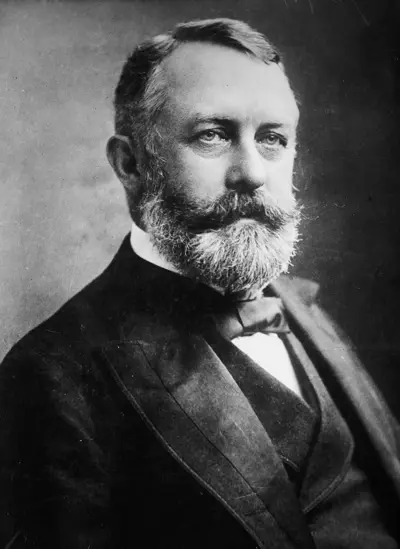
Henry Clay Frick was an American industrialist, financier, union-buster, and art patron. He founded the H. C. Frick & Company coke manufacturing company, was chairman of the Carnegie Steel Company, and played a major role in the formation of the giant U.S. Steel manufacturing concern. He also financed the construction of the Pennsylvania Railroad and the Reading Company, and had extensive real estate holdings in Pittsburgh and throughout the state of Pennsylvania. He later built the historic neoclassical Frick Mansion (now a landmark building in Manhattan), and upon his death donated his extensive collection of old master paintings and fine furniture to create the celebrated Frick Collection and art museum. However, as a founding member of the South Fork Fishing and Hunting Club, he was also in large part responsible for the alterations to the South Fork Dam that caused its failure, leading to the catastrophic Johnstown Flood. His vehement opposition to unions also caused violent conflict, most notably in the Homestead Strike.
