Andrew Jackson Quotes
You are a den of vipers and thieves ... by the eternal God, I will rout you out.
The bill passed, but Jackson, true to his word, vetoed it.
Andrew Jackson, 1767-1845, 7th President of the United States (Democrat, TN), Statement to a delegation of bankers who were lobbying for the Bank Renewal Bill of 1832, 1832
Sourced by: Eigen's Political and Historical Quotations

He said this as he threw them out of his White House office.


Referring to political columnist Drew Pearson:


In 1904, candidate Theodore Roosevelt solicited campaign funds from leading businessmen. After he was elected, he was viewed to have "turned" on them since he attempted to curtail monopolistic excess, instituted regulation, and made other business reforms. This is the original remark, but another, more sanitized version appeared in New York Times and other places as: “We bought him and he did not stay bought.”


See {639177}.for part of the article. Platt even demanded of President Roosevelt that the Journalist, White, be barred from the White House. Actually White was a very good friend of Roosevelt’s and generally agreed with White’s assessment of Platt.


A number of the American soldiers refused to obey Calley's illegal order. Some helped some villagers to escape, and a helicopter pilot landed betreen Callery's men and the villagers they were shooting at, and ordered his helicopter machine gun crew to fire on the soldiers if they did back off. The soldiers stopped firing at the civillians. However, his and other reports of the massacre were covered up by the military for a few years. Mai Lai was not the only major war crime perpetrated by Americans in the Vietnam War; there had been a few others. But given the years of fighting and the many opportunities war crimes violations under orders were quite rare. The Viet Cong had many more war crimes that they perpetrated, and our South Vietnamese allies repeatedly committed war crimes against their own people.


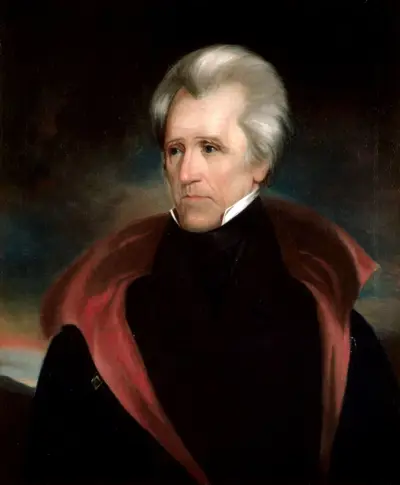
Andrew Jackson was an American lawyer, soldier, and statesman who served as the seventh president of the United States from 1829 to 1837. Before being elected to the presidency, Jackson gained fame as a general in the United States Army and served in both houses of the U.S. Congress. An expansionist president, Jackson sought to advance the rights of the "common man" against a "corrupt aristocracy" and to preserve the Union.
