Tom Denning Quotes
We are ... so anxious that neither the police nor the security service pry into private lives, that there is no machinery for reporting the moral misbehaviour of [Cabinet] Ministers.... It is perhaps better thus, than we should have a "police state.
Alfred T. Denning, British Jurist, Conclusion reached after his official report on the John Profumo sex scandal, Quoted in Life, October 11, 1963
Sourced by: Eigen's Political and Historical Quotations


In 2006, in the midst of the War on Terror, it was revealed that President George W. Bush had approved a electronic surveillance program that was on the surface contrary to the FISA laws prohibiting such government activity. The President claimed that the necessities of the war required such a deviation. A national debate ensued as to whether the President was always required to follow laws as passed or did he have “inherent powers” under the Constitution to do whatever he thought necessary to fight a war.


Snowden, was a contract worker for Booz Allan assigned to the National Security Agency (NSA). He felt that some of the NSA activities were illegal and unethical and tried to complain to NSA officials who rebuffed him. Despite the fact that he had signed an agreement not to do so, he copied many critical, classified documents that exposed much of the NSA activities that the NSA officials had denied existed—including lying under oath to the Senate. He then made many of them public, violating his oath, breaking the law, and opening up an entire area of government spying which most Americans knew nothing about and about which senior government officials had lied under oath to Congress. They of course wanted to prosecute Snowden who had told the truth, while they had lied. For many Americans, this became a moral and ethical conundrum.

Responders answer by pointing out that the government can incarcerate you and a corporation may not. Further, the 4th Amendment to the Constitution limit government action but not private action.


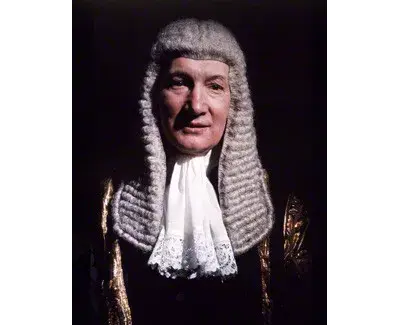
Alfred Thompson "Tom" Denning, Baron Denning, OM, PC, DL was an English lawyer and judge. He was called to the bar of England and Wales in 1923 and became a King's Counsel in 1938. Denning became a judge in 1944 when he was appointed to the Probate, Divorce and Admiralty Division of the High Court of Justice, and transferred to the King's Bench Division in 1945. He was made a Lord Justice of Appeal in 1948 after less than five years in the High Court. He became a Lord of Appeal in Ordinary in 1957 and after five years in the House of Lords returned to the Court of Appeal as Master of the Rolls in 1962, a position he held for twenty years. In retirement he wrote several books and continued to offer opinions on the state of the common law through his writing and his position in the House of Lords.
