Carol Moseley Braun Quotes
To me, that means getting back to the point where our Constitution means that you don't tap people's phones and poke into their e-mail and you don't arrest people and keep them hidden for a year and a half without charging them.
Moseley Braun, Carol. "Presidential Campaign Announcement." Howard University, Washington, D.C., 22 Sept. 2003.


In the aftermath of 9-11, there was a call for giving the law enforcement agencies more authority and the Patriot Act was passed in haste and fear. Some law enforcement personnel then went about picking up Arab Americans and in many cases holding them incommunicado without any charges. No terrorists were discovered by this process and yet good American citizens were abused, traumatized and insulted. In our zeal to protect American freedom, we actually began to resemble some of the capricious and abusive practices of our undemocratic enemies. There were other abuses allowed under the Patriot Act, but at the time of this writing the extent had not yet been revealed, but the refusal of the authorities to make public the national security benefits suggests that there was not much national security benefit and much abuse.

Snowden, was a contract worker for Booz Allan assigned to the National Security Agency (NSA). He felt that some of the NSA activities were illegal and unethical and tried to complain to NSA officials who rebuffed him. Despite the fact that he had signed an agreement not to do so, he copied many critical, classified documents that exposed much of the NSA activities that the NSA officials had denied existed—including lying under oath to the Senate. He then made many of them public, violating his oath, breaking the law, and opening up an entire area of government spying which most Americans knew nothing about and about which senior government officials had lied under oath to Congress. They of course wanted to prosecute Snowden who had told the truth, while they had lied. For many Americans, this became a moral and ethical conundrum.


He was the Chairman of the Senate Judiciary Committee. The intelligence and law enforcement advocates of reducing privacy rights so that law enforcement can prevent acts of terrorism frame the question as a tradeoff between civil right and safety. However, as Leahy and many others point out, we would not be much safer if we gave up all our ivil rights. Further, hundreds of thousands of American have given their lives so that we would have those civil rights. Without them what are we protecting.

Senator Church was the chairman of the committee. It’s reports (14 in all) are the most extensive documentation of U. S. intelligence ever compiled.


While this sounds good, in Taiwan it is not clear that the Premier has any authority over the intelligence agencies that is meaningful. Even in the United States Major intelligence leaders have lied to Presidents and the Congress about their clearly illegal activities, and many sceptics suggest that the Premier would have no way of knowing what his intelligence agencies are actually doing.

Many politicians were arguing that giving the intelligence agencies more power to wiretap, bug and hack into personal communications despite the 4th Amendment’s strictures argued that the public was in rational fear of terror attacks and had a right to be protected.


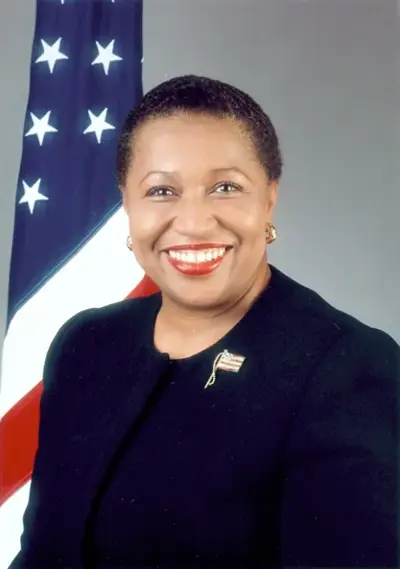
Carol Elizabeth Moseley Braun, also sometimes Moseley-Braun, is an American diplomat, politician and lawyer who represented Illinois in the United States Senate from 1993 to 1999. Prior to her Senate tenure, Moseley Braun was a member of the Illinois House of Representatives from 1979 to 1988 and served as Cook County Recorder of Deeds from 1988 to 1992. She was elected to the U.S. Senate in 1992 after defeating Senator Alan Dixon in a Democratic primary. Moseley Braun served one term in the Senate and was defeated by Republican Peter Fitzgerald in 1998.
