Thomas Hobbes Quotes
We are oblig'd therefore, by promises proceeding from fear, except the Civill Law forbid them, by vertue whereof, that which is promised becomes unlawfull.
Thomas Hobbes, 1588-1679, English Political Philosopher, Philosophicall Elements of a true Citizen
Sourced by: Eigen's Political and Historical Quotations


Despite Lincoln’s instructions, his agents did cut a few deals without which Lincoln would likely not been nominated


What oven gets overlooked in the history leading up to the Civil War was the terribly repressive atmosphere that developed in the South itself over the issue of slavery. There were some abolitionists in the South, and most of the slaves were held by a relatively few wealthy men. Many with no slaves or only one or two, might go either way on the slavery issue and the various fugitive slave laws. And Northern abolitionists sometimes would come South to investigate and report on the conditions of the slaves of the South. While still in the Union, many Southern areas made a mockery of the Constitutional protections of freedom of speech, freedom of the press. Censorship and repressive activities invaded privacy, and the South, for both Northerners and English travelers, no longer had the charm of the past. Note the use of the term “reign of terror”. Bunch was a seasoned diplomat experienced at reporting on conditions.

This Proclamation was issued upon arrival of the British occupying imperial army in present day Iraq. The English policy makers like the Bush administration almost a century later were expecting a more welcoming reaction. See {585250}.


This is one of the earliest examples of attempting to reduce crime by altering community norms.

This is the earliest surviving attempt of the Romans to formulate a legal code.


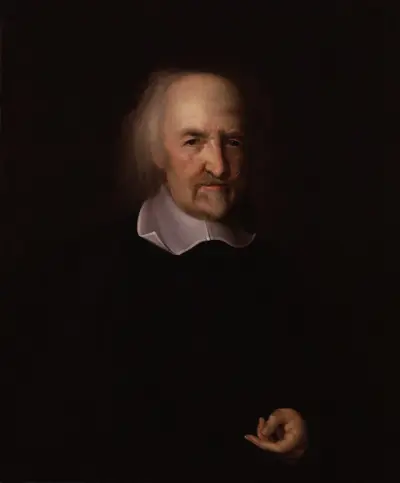
Thomas Hobbes was an English philosopher, considered to be one of the founders of modern political philosophy. Hobbes is best known for his 1651 book Leviathan, in which he expounds an influential formulation of social contract theory. In addition to political philosophy, Hobbes contributed to a diverse array of other fields, including history, jurisprudence, geometry, the physics of gases, theology, and ethics, as well as philosophy in general.
