William O. Douglas Quotes
We all come to the [Supreme] Court with our bags fully packed. What we take out of them may not have been used before, but they were there.
William O. Douglas, 1898-1980, U.S. Supreme Court Justice, Quoted in Katcher, Earl Warren: A Political Biography, McGraw Hill, 1967
Sourced by: Eigen's Political and Historical Quotations


Referring to the Brown v. Board of Education, the Topeka, KS, Supreme Court school desegregation decision:


The New Deal liberal Democrats had complained that the Supreme Court was making national policy and law and not interpreting law. They tried to pack the Supreme Court by adding more justices who would be more sympathetic to the New Deal. (See {587549}.) At the beginning of the 21st century it was the conservative Republicans who were making the same claim that the Supreme Court was making law and not interpreting it. The pattern seems to be when the court votes for your side, they are interpreting the law. When they vote for the other side, they are activist—making law improperly.


Two openings appeared on the Supreme Court for Nixon to fill. He heard from many people on recommendations, but he wanted to fill the posts with “strict constructionists.” Rehnquist had written giving him a political operational definition of a strict constructionist. This memo was never released to the public by the White House on the grounds that it was protected by Executive Privilege. However, the definition given had virtually nothing to do with the concept of strict construction but is a definition of a ideological conservative constructing his own meaning to the Constitution. The source for the text came from John Dean, the Counsel to the President, who found this memo in his White House file and revealed it at a question and answer session at the Commonwealth Club of San Francisco, October 10, 2001.


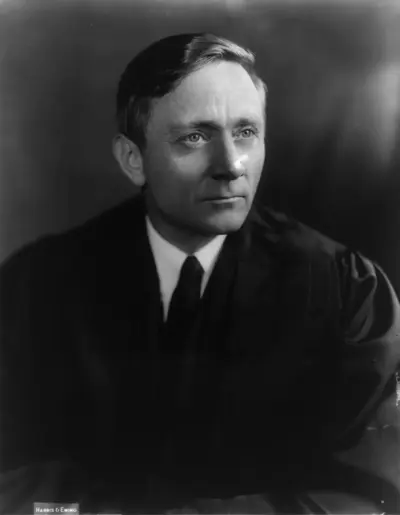
William Orville Douglas was an American jurist and politician who served as an associate justice of the Supreme Court of the United States. Nominated by President Franklin D. Roosevelt, Douglas was confirmed at the age of 40, one of the youngest justices appointed to the court. His term, lasting 36 years and 211 days (1939–75), is the longest in the history of the Supreme Court. In 1975, Time magazine called Douglas "the most doctrinaire and committed civil libertarian ever to sit on the court."
