Peter Kropotkin Quotes
Vladimir Ilyich, your concrete actions are completely unworthy of the ideas you pretend to hold.
Peter Kropotkin, 1842-1921, Russian Prince and Anarchist Letter to Lenin, December 21, 1920
Sourced by: Eigen's Political and Historical Quotations


Harriman at that time was the United States Ambassador to Russia and one of President Roosevelt’s closest advisers. There were those who claimed that the Roosevelt administration was very naïve about the potential danger of Stalin. This statement as well as others like it, show that the administration was not so naïve and ignorant.

Paine had been imprisoned in France for his political writings. After inspiring the nation in the Revolution, he was not a very popular figure in America, being regarded as an atheistic, rabble-rouser. The President distanced himself from the situation and did nothing to secure Payne's release.

Vladimir Lenin. Early in the Russian Revolution, Trotsky was thought of as the leading and most prestigious member of the revolution while formal positions and constitutions were being developed. Lenin himself thought this reasonable. Later, Stalin would have Trotsky assassinated.


He was referring to his campaign in 2000 where South Carolina was a very important state in the Republican primary elections and he was campaigning there. At that time, the racist tradition of flying the Confederate Flag, a symbol of slavery and disloyalty to the Union, over the state capitol was a hot political issue with Blacks and some whites outraged and many conservatives who were insistent that the tradition be maintained. McCain, not wanting to offend the conservative who were the core of the voters in the Republican primary, said he did not see anything wrong with the practice when it really offended him as it did most Americans at the time.


This quotation illustrates the statements of White that caused conservatives to dislike him. However, most historians agree that White passed classified information to the Russians. He was accused of being a Communist, but there was never any evidence of that. Some people believe that he was a spy for the Russians and committed espionage, but others disagree observing that White was very much his own man and felt that much information that was classified never should have been. White substituted his own judgment, it is believed, about what could be given to the Russians for the security system. He was an admirer of what Russian socialism had accomplished economically, educationally and medically since the 1917 revolution deposing the Czar. Russia had been a valuable military ally, which had taken the brunt of both military and civilian casualties in WWII. White’s economics were certainly not Marxist but very much Keynesian. He was subpoenaed by the House Un-American Activities Committee where he was accused of being a Communist which he denied (see {634907}). He died of a heart attack 3 days later.


Welch was a conspiracy theorist paranoid and gave the legitimate conservatives of the time a bad name. The quotation was in the first version of the book, and then it was removed.


Only 6 years after the Russian Revolution Lenin was already being perceived as an international provocateur and instigator of problems.


President’s did not have then the kinds of staff resources that they would get later. Roosevelt had friends and professional relationships with journalists, military men, business men and others whom he used for staff work and advice. Franklin Delano Roosevelt also used this technique extensively.


See Churchill’s Motto {589146} to see some of the reasons for the Gladstone view.

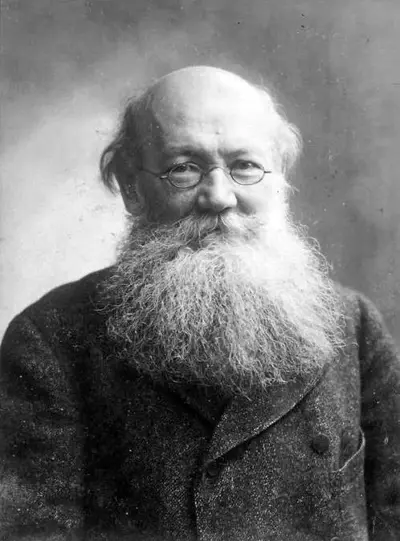
Pyotr Alexeyevich Kropotkin was a Russian anarchist, socialist, revolutionary, economist, sociologist, historian, zoologist, political scientist, human geographer and philosopher who advocated anarcho-communism. He was also an activist, essayist, researcher and writer.
