Emile Zola Quotes
Violence has never prospered, you can't remake the world in a day. Anyone who promises to change everything for you all at once is either a fool or a rogue!
Zola, Émile. Germinal. Translated by Havelock Ellis, Boni and Liveright, 1924.


The Turkish revolution was by historical standards relatively bloodless as compared especially with other republican revolutions like the United State and France. However, the revolution that brought Ataturk to power was a relatively mild one in terms of the immediate changes that unlike many revolutions which produced instant radical change. In Turkey, the radical change took place in the years after the revolution when Ataturk with hardly any bloodshed produced compulsory public secular education, scientific elevation in society, separation of mosque and state, gender equality including universal voting, change to western dress, elimination of the caliphate, speech and press freedom, and many others including changing the entire language to use the Latin alphabet instead of Arabic. No nation in history has gone thought more social and cultural change and modernized so fast as Turkey after its revolution. The result is the most modern and successful Islamic country in the world.


This was King’s first appearance on the nation’s most prestigious news show.


Jorge Mario Bergoglio. Interestingly he was known as a reformer and his critics suggested that he reformed too fast.
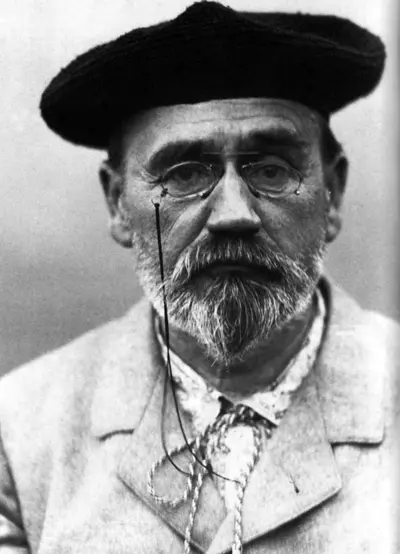
Émile Édouard Charles Antoine Zola was a French novelist, journalist, playwright, the best-known practitioner of the literary school of naturalism, and an important contributor to the development of theatrical naturalism. According to major Zola scholar and biographer Henri Mitterand, "Naturalism contributes something more than realism: the attention brought to bear on the most lush and opulent aspects of people and the natural world. The realist writer reproduces the object's image impersonally, while the naturalist writer is an artist of temperament." He was a major figure in the political liberalization of France and in the exoneration of the falsely accused and convicted army officer Alfred Dreyfus, which is encapsulated in the renowned newspaper headline J'Accuse…! Zola was nominated for the first and second Nobel Prize in Literature in 1901 and 1902.
