Lyndon B. Johnson Quotes
Until justice is blind to color, until education is unaware of race, until opportunity is unconcerned with the color of men's skins, emancipation will be a proclamation but not a fact.
Lyndon Baines Johnson, 1908-1973, 36th President of the United States (Democrat, TX), Speech, Gettysburg, PA, May 30, 1963
Sourced by: Eigen's Political and Historical Quotations


Blacks were fighting and dying in WWII. They were equal when they were under fire, but otherwise not. The war was against fascist protagonists whose creed was inequality while the allies were upholding freedom and equality. But making that aspiration a reality was difficult.

Most politicians at the time agreed with this statement. In the next 25 years, the economic system grew less fair and when government officials tried to come up with remedies, they sublimated fairness, to economic recovery, and America went through a phase where fairness was far less important then it traditionally had been.


The power structure of England and the English administrators of South Africa were strong advocates of racial equality at the beginning of the 19th century. They insisted on equal administration of law. However the Boer white population could think of nothing more absurd. In a sense the Boers were much like the Southern Whites at the same time. The South African government however could not enforce its equality policies in the rural area – the majority of South Africa at the time. When democracy and self rule came to South Africa, the racially moderating force of the English was minimized and the majority of South Africans wanted a racially segregated society. Apartheid resulted.

Many fighters for civil rights split from the majority of the Black leadership over racial preferences for affirmative action.


It would be over 80 years before President Harry S Truman accomplished the result by issuing an Executive Order.

Douglas was appealing to the racist crowd in Galesburg by showing that Lincoln actually believed in Racial Equality. This technique was used be racist politicians—since then and in a few places of the South even into the 21st century.
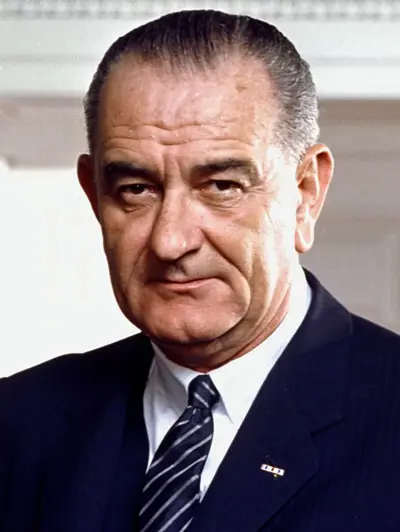
Lyndon Baines Johnson, often referred to by his initials LBJ, was the 36th president of the United States, in office from 1963 to 1969. He served as the 37th vice president from 1961 to 1963 and assumed the presidency following the assassination of President John F. Kennedy. A Democrat from Texas, Johnson was also a United States representative and later majority leader in the United States Senate. Johnson is one of only four people to have served, at various times, in all four federal elected positions.
