Oliver Ellsworth Quotes
United States
In the markup of the draft Constitution he proposed an amendment that changed “national government” to “United States.” It was accepted, and thence the name used ever since.
Oliver Ellsworth, 1745-1807, Member of the Continental Congress, U.S. Senator (Federalist, CT), Chief Justice of the U.S. Supreme Court, U.S. Minister to France, Constitutional Convention, Philadelphia, 1787
Sourced by: Eigen's Political and Historical Quotations

This appears to be the first dated use of this phrase. Thomas Paine used the term in a publication on January 13, 1777, and is often incorrectly given credit for its coinage. Actually, Paine was not even the first to publish the phrase. Four days after Gerry wrote his letter, a letter to the editor appeared in the Pennsylvania Evening Post signed “Republicus.” His identity is not known. A few days later, July 4, the Declaration of Independence was signed. Its last paragraph refers to “the Representatives of the United States of America.” But the Declaration, drafted by Thomas Jefferson and Benjamin Franklin was actually drafted from June 11 to June 28, so this draft may have predated Gerry’s letter. In 1775 Franklin had published the term, “United States of North America,” and Thomas Jefferson used the phrase, “The American states united” in 1774.

In a House debate in 1923 on the Nordic or Latin discovery of America, Congressman Summers of Washington asked Italian-American Congressman La Guardia to yield to ask whether or not Christopher Columbus had come from "your country."

The First and Official Use of the Name


As this passage makes clear, the Southern States would not accede to a Union unless they had more representation than the larger Northern states. Thus the infamous three-fifths clause. This meant that white slave owners had proportionally more representatives in Congress and more votes in the Electoral College than whites in the Northern States. This artificial majority kept slavery from being abolished until the Civil War.

In the 1787 Constitutional Convention in Philadelphia, the delegates agreed that the there would be no official transcript and that the debates were to be kept secret:


George W. Bush. See {618119} for the rejoinder to the defense.

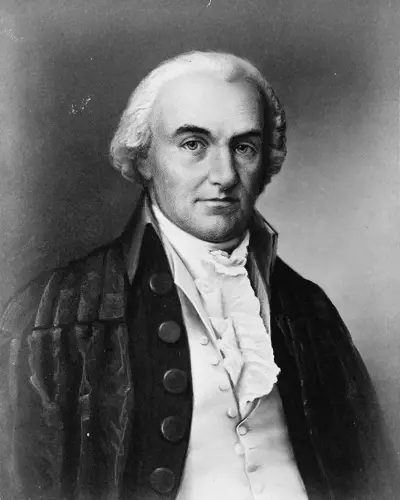
Oliver Ellsworth was an American lawyer, judge, politician, and diplomat. He was a framer of the United States Constitution, a United States Senator from Connecticut, and the third Chief Justice of the United States. Additionally, Ellsworth received 11 electoral votes in the 1796 presidential election.
