Oxford English Dictionary Quotes
Turk: Anyone behaving as a barbarian or savage.
By the beginning of the 16th century, the Christian Islamophobia and prejudice had spread to each country of Europe. As this quotation illustrates, it even was institutionalized to language.
Oxford English Dictionary, Definition of “Turk”, 1526
Sourced by: Eigen's Political and Historical Quotations

Most people would assume that he was referring to the Native Americans but to many early Americans Catholics were more heathen than ignorant Indians.

1st Earl of Oxford. While clearly a gross overgeneralization, the Austrian leadership were in the process of making some very stupid policy decisions that led to WW I and the destruction and breakup of their empire.

Johnson was probably the most racist president in American History. Also the most ignorant. He is the only President to have never attended a single day of school.

Characterizing President Harry S Truman:

In 1910 a consortium of American and European banks was formed to loan the Chinese government money for development. A preliminary agreement was made, but the Chinese backed away, responding to the growing domestic unrest at foreigners controlling too much of China's economy. The consortium appealed to the Western governments' foreign offices to pressure the Chinese; the American ambassador was instructed to demand that the Chinese conclude the loan negotiation. He described what he was instructed to do as:. The loan was concluded and led to protests and violence in China.

They were both children of Queen Victoria of England.


What is fascinating about this quotation is that England itself was an aristocracy with a monarchy and very few elements of fairness and equality. The aristocracy and the monarch very much used the system and the common people for their benefit. However, the degree of abuse and tyranny and absence of any sense of equity, shocked even this English aristocrat. Behoof was a Middle English word derived from words that mean to profit from. By the time he used it, it meant benefit or advantage—a slightly wider meaning, but even in 1591 it was not a commonly used words but one used more by the intelligentsia of the day.

See {583928} and {583922}

The Greeks committed many atrocities in their war with Turkey. See {584483}

Turkey with the decline of the Ottoman Empire, had little experience in modern international politics—and no modern leaders until Ataturk came and modernized the nation. The Turks had allied themselves with Germany in WWI and in the aftermath came out as badly in the peace as they had in the war.

The neo-conservative expectation of the American invasion of Iraq almost a century later was essentially the same, and the false expectation led to the same kind of failure as the George W. Bush debacle of the early 21st century.


Some citations quote Patton using the word “Asiatic” rather than “amiable” in the fourth sentence but sources with the full diary entry use “amiable.”

Disraeli was the 1st Earl of Beaconsfield

George Canning, 1770-1827, the British Foreign Minister at only 35 years of age was considered the most brilliant politician of this time. He would have been a natural selection for Prime Minister. However, early in Canning's boyhood his father had been disinherited and died in poverty and his mother worked as an actress to support the family. This quotation shows the snobbery and class distinction that permeated England at the time.


Refers to a system of plural wives
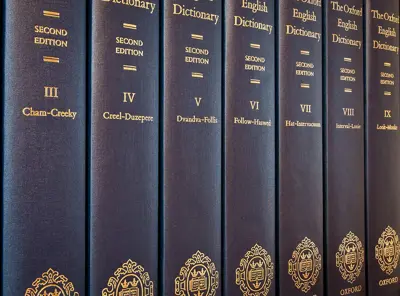
The Oxford English Dictionary (OED) is the principal historical dictionary of the English language, published by Oxford University Press (OUP). It traces the historical development of the English language, providing a comprehensive resource to scholars and academic researchers, as well as describing usage in its many variations throughout the world.
