Alan Siegel Quotes
Too many politicians are shifting the critical themes of our national conversations from a 'big ideas' American Brand Platform to narrowly focused, polarizing sound bites that put party philosophy before what used to be heralded as the common good. These ideas, more often than not, divide us rather than serve to bind us.
Siegel, Alan. "Re-charging the American Brand." HuffPost, 2 Aug. 2011.

Despite his fears, that is exactly what happened. Ironically, he himself was the focus of much dissatisfaction with the administration, and the Federalists led by Adams and the Democratic Republicans led by Jefferson opposed each other, ousting Adams.

At the time Congress was gridlocked in bitter hyperpartisan conflict. Most people called for more comity and bipartisanship and most politicians wanted more bipartisanship but blamed the other party for the rift. Mourdock, arguing for less bipartisanship and no compromise defeated Richard Lugar in the Republican Senatorial Primary election. Lugar, one of the most respected and effective Senators was a statesman who worked with any and all to find effective compromises to reach national solutions. The nation was so politically polarized that the Republican Indiana voters ousted one of their most senior senators because he was effective at developing national solutions. See {626717} and {302706} for other Mourdock’s outrageous comments. While this rhetoric won in the Primary, it lost him the general election in a state where Republicans had a strong majority and should have had the seat.


In the Early 21st Century, the vast majority of the entertainment industry were supporters of the Democratic party. This has generally been true throughout history where entertainers have been on the left politically except in left leaning dictatorships like China and the Soviet Union where those governments tend to see entertainers as reactionaries. In general entertainers talk, sing, and dramatize about and criticize the status quo.


This was a new political phenomenon where a President was perceived as more important, more powerful, and preferable to his party. Note that the base of the scale is labeled “Public Opinion”.

After Roosevelt, most eras of American politics more or less followed the pattern Roosevelt described herein as a “calamity”, with the anger becoming more or less intense. Jefferson thought that these were natural divisions of politics in all societies--{604810}. The thing that masked this for years was race and slavery. In Lincoln’s time there were liberals and conservatives in both parties if race were ignored. In Theodore Roosevelt’s era, he, Taft and others were generally liberal reformers, while a large number of Republicans were conservative supporters of the status quo. Some democrats were radical reformers like William Jennings Bryan while others were arch conservatives. Until 1964 and the Civil Rights Act there were many conservatives in the Democratic Party, but almost all switched to the Republican Party in anger. The Republican conservatives tended to drive the Republican liberals out of the party and for the last part of the 20th century Roosevelt’s “calamity” well described the American political scene, and the anger increased carrying partisan bitterness into the 21st century.


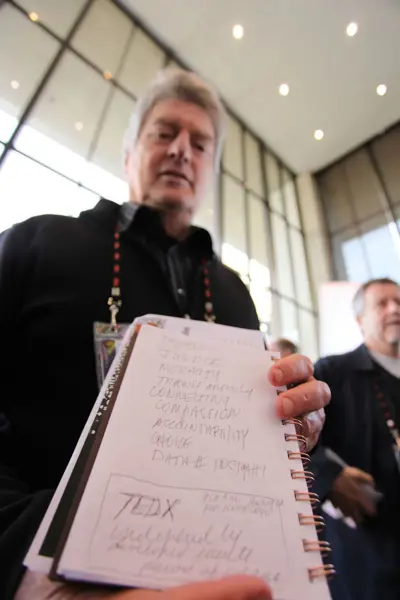
Alan Siegel is the CEO of Siegelvision, a brand identity consultancy. He is the founder and chairman emeritus of the global brand strategy firm Siegel+Gale.
