Henry Ford Quotes
Tomorrow at 10 in New York, representatives of every big newspaper will come to my apartment for a story. I have today chartered a steamship. I offer it to you to send delegates to Europe. If you feel you can’t act, I will.
This quotation illustrates the fact that at that time, individual citizens could legally conduct their own foreign policy in the name of the United States. Further, while a century later, wealthy Americans might pressure Presidents on policy issues by threatening to finance opponents or fund PACs to run ads against the administration’s positions, at that time they threatened to actually operate their own foreign policy. The President did not send a delegation on Ford’s ship, but Ford did. The Ford peace initiative collapsed in a fiasco. The great industrialist was way out of his expertise. Later, Congress passed laws prohibiting Americans from conducting their own diplomatic initiatives.
Henry Ford, 1863-1947, Industrialist & Philanthropist, Unsuccessful Republican Michigan U. S. Senatorial Candidate [1918], Statement to President Woodrow Wilson, The White House, November 1915
Sourced by: Eigen's Political and Historical Quotations


Convicted terrorist Timothy McVeigh has requested the public televising of his execution.


Just quotation tells us something about Mrs. Roosevelt that is fascinating. Note that she tells us that she had her usual press conference. She typically had several press conferences a week. Before Mrs. Roosevelt, first Ladies did not have press conferences by themselves. She did almost wherever she went. She had more than the President did. And the presidents staff rarely knew what she was going to say. They found out about it in the next day’s newspapers. No first lady before or since then has ever had as much access to the press or as independent access as Mrs. Roosevelt.


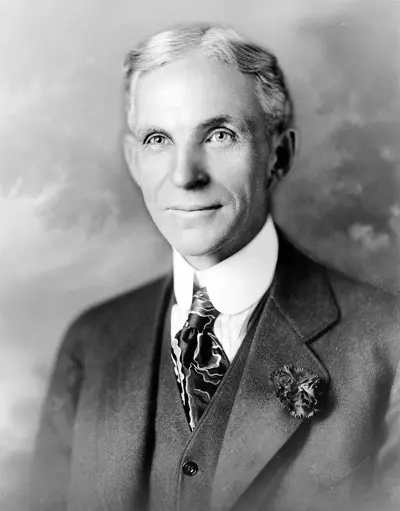
Henry Ford was an American industrialist, business magnate, anti-Semite, and founder of the Ford Motor Company and chief developer of the assembly line technique of mass production. By creating the first automobile that middle-class Americans could afford, he converted the automobile from an expensive curiosity into an accessible conveyance that profoundly impacted the landscape of the 20th century.
