Stefan Zweig Quotes
Today, for a Jew who writes in the German language, it is totally impossible to make a living. In no group do I see as much misery, disappointment, desperation and hopelessness as in Jewish writers who write in German.
Zweig, Stefan. Stefan Zweig: Briefe an Freunde. Edited by Richard Friedenthal, S. Fischer Verlag, 1978, p. 237.


This was quite shocking to most Italians where Jews had been very assimilated for years and anti-Semitism was not as embedded in society as in Germany.

He and almost all of the Jews in Germany were expected to act like Germans. There was no room for maintaining and developing their own ethnic customs and traditions. When he arrived at New York, he was treated as a great celebrity by Mayor La Guardia, who was fluent in Yiddish, and other dignitaries some of whom were Jews and even met President Warren G. Harding. He lectured at City College and for the first time in his life saw Jews who had any distinguishing culture and customs—and the informality, egalitarianism, gregarious, free speaking, fun loving was just the opposite of the norms that he had grown up with in Germany which he did not like. See {640911}. He would later become a part of that culture and be seen as a leader, even being offered the Presidency of the new state of Israel in 1949.


See {619709}. Ever since the Jews were ejected from their nation by the Romans, there have been some Jews and non-Jews who believed that the refusal of other nations to allow Jews citizenship inhibited their assimilation and was God’s way of maintaining the Jews as a distinct people so that they may fulfill Biblical prophesy and return to the Land of Israel. Stiles was a leading historian of his day and specialized in ancient Biblical history. Most people however, and most Jews, do not hold with this theory.


He was distraught at the persecution his family was forced to endure in Germany.


Disraeli was attacked for being Jewish: 1st Earl of Beaconsfield


According to Bauer and his anti-Semitic followers, the problem with the Jews was Judaism


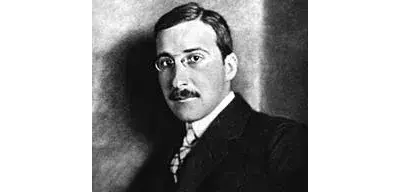
Stefan Zweig was an Austrian novelist, playwright, journalist and biographer. At the height of his literary career, in the 1920s and 1930s, he was one of the most widely translated and most popular writers in the world.
