Aristotle Quotes
To the size of the state there is a limit, as there is to plants, animals and implements, for none of these retain their facility when they are too large.
Aristotle, 384-322 BC, Greek Philosopher & Teacher, Politics, 343 BC
Sourced by: Eigen's Political and Historical Quotations


Brandeis was one of the first to question the general proposition that bigness is always better and the increasing size of organizations does not always produce corresponding efficiency or other value.


3rd Earl Russell of Kingston. He was right on the 1st, and time will tell about the 2nd. But at the time he made this prediction, America was not a superpower, and was considered behind, England and France and just passing Argentina. At the time, America was reeling from the 1929 stock market crash and the Great Depression. The development of the United State through the FDR era including WWII was amazing. And by 1948 America was not only number 1, but the only Superpower at the time.

The Interstate Commerce clause of the Constitution ensured that this would happen. It was so successful that the EEC and other groups of countries tried to emulate it by creating legal common markets.

One of the reasons that Jefferson and others were so anxious to expand the territory of the United States was that Britain had operated with the policy that curtailed and limited the population growth of the American colonies and the resentment of this policy led to growth of America and the Westward expansion.


Prevented by the Military from ever taking office

James Madison agreed on the importance of infrastructure but disagreed that the Congress had to Constitutional authority to spend federal money for an improvement in a state. See Quote 644277.


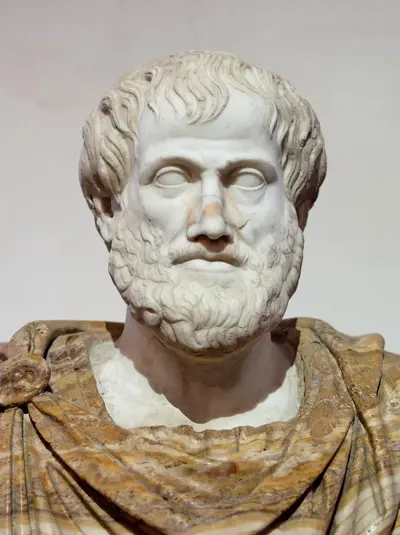
Aristotle (/ærɪˈstɒtəl/; Greek: Ἀριστοτέλης Aristotélēs, pronounced [aristotélɛːs]; 384–322 BC) was a Greek philosopher and polymath during the Classical period in Ancient Greece. Taught by Plato, he was the founder of the Lyceum, the Peripatetic school of philosophy, and the Aristotelian tradition. His writings cover many subjects including physics, biology, zoology, metaphysics, logic, ethics, aesthetics, poetry, theatre, music, rhetoric, psychology, linguistics, economics, politics, meteorology, geology and government. Aristotle provided a complex synthesis of the various philosophies existing prior to him. It was above all from his teachings that the West inherited its intellectual lexicon, as well as problems and methods of inquiry. As a result, his philosophy has exerted a unique influence on almost every form of knowledge in the West and it continues to be a subject of contemporary philosophical discussion.
