Bertrand Russell Quotes
It is likely that America will be more important during the next century or two, but after that it may well be the turn of China.
3rd Earl Russell of Kingston. He was right on the 1st, and time will tell about the 2nd. But at the time he made this prediction, America was not a superpower, and was considered behind, England and France and just passing Argentina. At the time, America was reeling from the 1929 stock market crash and the Great Depression. The development of the United State through the FDR era including WWII was amazing. And by 1948 America was not only number 1, but the only Superpower at the time.
Bertrand Russell, 1872-1970, British Philosopher & Reformer, Letter to Rachel Gleason Brooks, May 5, 1930
Sourced by: Eigen's Political and Historical Quotations


Many of his colleagues were concerned that there were relative power changes in the world and argued that no change should be tolerated by England. However, change is always in process although often it is not noticed until it has advanced and changed the balance of power. The rise of China, India and Brazil in the beginning of the 21st century are an example.


He was very sensitive to the criticism of China’s human rights record. The Chinese leadership was very proud to their accomplishments of lifting hundreds of millions of people out of poverty and eliminating hunger and starvation, and many foreigners from developed nations were seemingly inattentive to the remarkable economic success in their focus on human rights shortcomings.


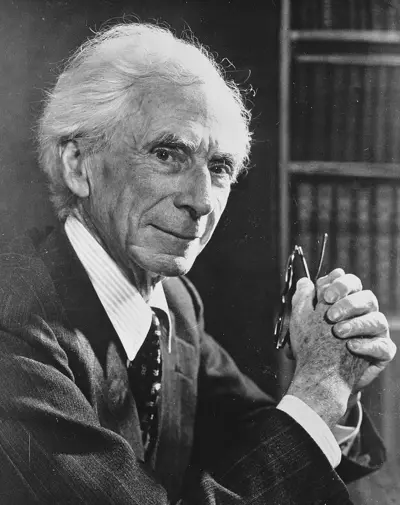
Bertrand Arthur William Russell, 3rd Earl Russell OM FRS was a British polymath, philosopher, logician, mathematician, historian, writer, social critic, political activist, and Nobel laureate. Bertrand Russell was one of the most influential and widely known intellectual figures of the twentieth century. In 1950 he was awarded the Nobel Prize in Literature for his extensive contributions to world literature and for his “rationality and humanity, as a fearless champion of free speech and free thought in the West.“
