Peter G. Peterson Quotes
If we do not have the economic resources to be a leader, it’s going to affect our foreign policy.
Peter G. Peterson, U. S. Secretary of Commerce (Republican), Interview, PBS The Charlie Rose Show, April 2, 2008
Sourced by: Eigen's Political and Historical Quotations


3rd Earl Russell of Kingston. He was right on the 1st, and time will tell about the 2nd. But at the time he made this prediction, America was not a superpower, and was considered behind, England and France and just passing Argentina. At the time, America was reeling from the 1929 stock market crash and the Great Depression. The development of the United State through the FDR era including WWII was amazing. And by 1948 America was not only number 1, but the only Superpower at the time.

The change in perception came as a result of Admiral Dewey’s May 1898 victory over the Spanish fleet in Manila Bay. The United States had bested a European power.


He argued to take every statement or threat of violence against America or Americans made by a foreign leader, even if for local political purposes, as a clear and present danger that requires action, often including force to nullify that country's capability to harm America or to produce a regime change. Many point to Adolf Hitler who had, in Mein Kampf, told the world what he would try and do, and few paid any attention to him. On the other hand, when he was at his most dangerous and planning massive world aggression, his rhetoric was very moderate and peaceful. The vast majority of the foreign leaders who threaten America and her interests, never have acted on those threats. However, one danger is the incitement of others in the country or region who might become a threat to America as an individual or a non state terror group.
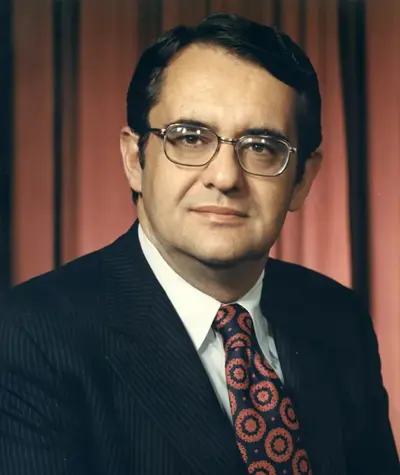
Peter George Peterson was an American investment banker who served as United States Secretary of Commerce from February 29, 1972, to February 1, 1973, under the Richard Nixon administration. Before serving as Secretary of Commerce, Peterson was also chairman and CEO of Bell & Howell from 1963 to 1971. From 1973 to 1984 he was chairman and CEO of Lehman Brothers. Later in 1985, he co-founded the private equity firm The Blackstone Group, and served as chairman. In the same year, Peterson became chairman of the Council on Foreign Relations, a position he held until his retirement in 2007 after which he was named chairman emeritus. In 2008, Peterson was ranked 149th on the "Forbes 400 Richest Americans" with a net worth of $2.8 billion. He was also known as founder and principal funder of The Peter G. Peterson Foundation, which is dedicated to promoting fiscal austerity.
